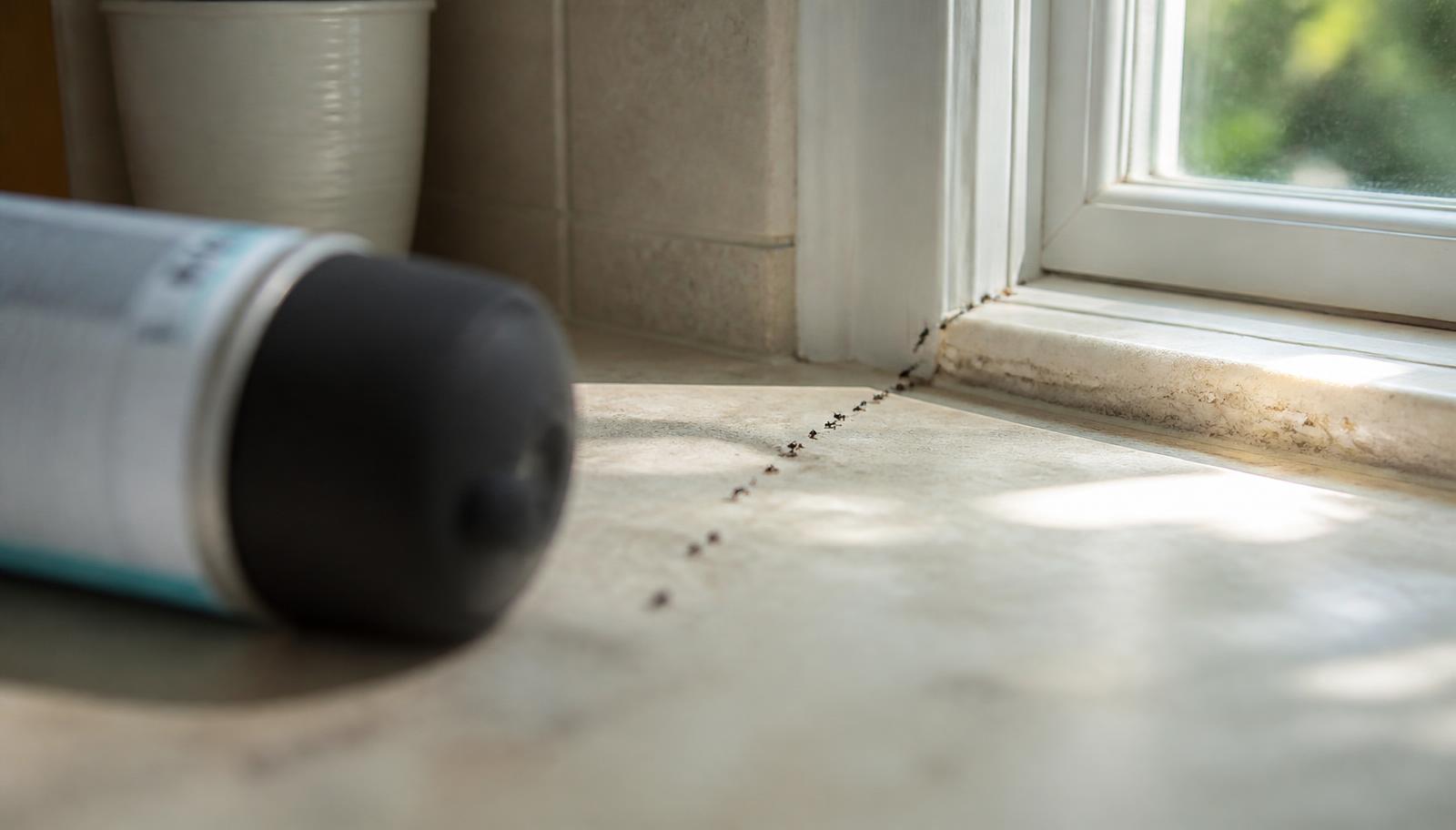
Why Do Ants Keep Coming Back After You Spray? Because the Spray Never Touches the Colony (2026)
By the Bobby Bugs Team, Licensed New York State Pest Control Applicators, Serving Nassau, Suffolk, Queens & The Bronx
9 min read
Key takeaways
- The ants you see are foragers, a small fraction of the colony. Killing them changes nothing for the queen, who keeps producing replacements.
- Repellent sprays can make some infestations worse by triggering colony budding, where one stressed colony splits into several smaller ones.
- The visible trail vanishing for a few days is not success. The colony reroutes and returns, which is why spray-and-wait has you spraying all summer.
- Real elimination uses non-repellent products and slow-acting bait the foragers carry back to the queen. The colony collapses from the inside over 2 to 4 weeks.
- Spraying over professionally placed bait is the fastest way to stall your own treatment. Let the foragers eat.
- Bobby Bugs quotes ant work in writing, for free, before any work begins, anywhere in Nassau or Suffolk County, with a 90-day written guarantee.
Why do ants keep coming back after spraying?
Ants keep coming back after spraying because the spray only reaches the foragers you can see, and foragers are a small, replaceable fraction of the colony. The queen, the brood, and the bulk of the workers never leave the nest, so the colony simply produces new foragers and opens a new trail, often within a day or two.
There is a second mechanism most homeowners never hear about. Ants follow pheromone trails, and a spray or a wipe of vinegar erases the trail without touching the nest. The line of ants disappears, the kitchen looks solved, and the colony spends the next day scouting a new route through a different crack. That loop, spray, quiet, new trail, spray again, is exactly what a whole summer of consumer ant products looks like, and the colony is intact the entire time.
We will be straight with you: the spray aisle is not designed to end your ant problem. It is designed to sell you satisfying, visible, temporary kills. The companies that make those products count on the colony surviving, and frankly, so does any exterminator who shows up, sprays the baseboards, and books your next visit before leaving. Ending the problem means killing a queen you will never see, and that takes a completely different approach.
Does spraying ants actually make the problem worse?
It can. Repellent sprays put a colony under chemical stress, and some species respond by budding, meaning the colony splits into two or more smaller colonies with their own egg-laying queens in new locations. Odorous house ants, the small dark ants most common on Long Island kitchen counters, are notorious for this, and Pharaoh ants respond the same way.
Budding is how one manageable nest against your foundation becomes satellite colonies in a wall void, under the kitchen kick plates, and behind the bathroom vanity. It is also why we sometimes walk into Nassau and Suffolk homes where months of diligent spraying have produced more trails than the homeowner started with. The instinct to hit the trail with the strongest spray on the shelf is understandable, and it is precisely the wrong move for the species most likely to be on your counter.
Where are the ants actually coming from?
The ants in your kitchen are almost never living in your kitchen. The colony is typically outside in the soil against your foundation, under a patio or driveway slab, in mulch piled against the siding, or inside a wall void or slab crack, with foragers commuting in through gaps around windows, doors, and utility lines.
On Long Island the pattern splits by housing stock. Older Nassau County kitchens with worn caulking around counters and window frames are classic odorous house ant territory, while newer Suffolk construction on wooded lots tends to see pavement ants pushing in from patios and slabs. Trails that appear within an hour of rain usually trace to a soil colony against the foundation, because rain floods the nest and sends the colony looking for dry ground, which is your house.
Trails showing up in multiple rooms at once usually means a satellite colony structure rather than a single nest, which changes the treatment plan. And one identification note that matters more than all the others: larger black ants around window frames, especially in wooded Suffolk yards, are often carpenter ants, which nest in wood and are a separate, more urgent problem. If that sounds like yours, go straight to our carpenter ant treatment page.
What actually gets rid of ants permanently?
Permanent ant elimination means killing the queen, and the only practical way to reach her is to let the ants do it. Professional treatment uses non-repellent products the ants cannot detect and slow-acting bait that foragers carry back and feed to the queen and brood, collapsing the colony from the inside over 2 to 4 weeks.
The two product classes work together. The non-repellent perimeter treatment is invisible to the ants, so they keep walking through it and carry it back on their bodies instead of avoiding it the way they avoid a repellent spray. The bait exploits the colony's own food-sharing behavior: foragers swallow it, walk it home, and pass it around, including to the queen. Slow-acting is the whole point. Bait that killed foragers on the spot would never reach the nest.
This is also why the single most common way homeowners sabotage their own treatment is spraying over the bait or wiping down the trails after we leave. Every forager you kill at the bait line is a courier that never delivers. Once the bait is down, the winning move is the counterintuitive one: leave the ants alone and let them eat.
What does a professional ant treatment look like?
A professional ant treatment is free phone triage, a full interior and exterior inspection, a non-repellent perimeter treatment paired with targeted colony bait, interior spot work at active trails, and a written 90-day guarantee.
Here is the exact process we run on Long Island ant jobs, and the reason each step exists.
- Free phone triage. We confirm the likely species from your description, flag anything that sounds like carpenter ants, and give you the price in writing up front.
- Inspection. We walk the exterior perimeter, foundation, and patio and trace the interior trails back to their entry points, because treating the wrong side of the wall wastes everyone's time.
- Non-repellent exterior perimeter treatment plus targeted colony bait, positioned on the routes the foragers are actively using.
- Interior spot treatment at active trails, focused on cracks, voids, and behind kitchen kick plates, not a blanket spray of your counters.
- Written 90-day guarantee. If activity resumes inside the window, we come back and re-treat free.
How long until the ants are gone after treatment?
Most Long Island ant jobs show a dramatic drop in visible activity within 3 to 7 days, and the colony collapses over the following 2 to 4 weeks as foragers carry bait back to the queen. Very large, mature colonies on wooded lots can take up to 6 weeks to go fully silent.
Expect to keep seeing some ants in week one, and understand that this is the treatment working. Those foragers are hauling bait into the nest, and their traffic is the delivery system. The 90-day guarantee window is built to cover the full colony-collapse period with a comfortable buffer, so if trails are still active after the collapse window, the return visit is already paid for. What we ask in exchange is patience with the process: no spraying, no vinegar, no wiping the trails while the bait does its work.
How much does an ant exterminator cost on Long Island?
Ant cost on Long Island depends on the size of the home, how many colonies are active, apartment versus single family house, and whether follow-up visits are needed after the bait works through the colony. National averages published online often do not match Long Island reality. Bobby Bugs quotes every job in writing, for free, before any work begins, the invoice matches the quote, and general ant work carries a 90-day written guarantee.
National cost guides average single spray visits and recurring plans across the whole country, and the cheap end of that range is usually the repellent spray-and-return model this article just spent six sections explaining the problem with. A cheap spray visit repeated five times a season is not cheaper than one quoted job that ends with a dead colony and a written guarantee. Price the outcome, not the visit. The full details of what we treat and how are on our ant exterminator on Long Island service page, or you can browse our full list of pest control services.
How do you keep ants from coming back for good?
Once the colony is dead, prevention is about denying the next colony a route and a reason: seal exterior cracks and worn caulking, keep mulch and vegetation off the siding, and cut off easy sugar and grease inside.
Once the colony is dead, prevention is about denying the next colony a route and a reason. Seal exterior cracks around windows, doors, and utility penetrations, and replace deteriorated caulking around kitchen and bathroom counters, which in older Nassau homes is often the main highway. Keep mulch at least six inches off the siding and trim shrubs and branches so no vegetation touches the house, because ants use branches as bridges into siding and soffits.
Inside, the targets are sugar and grease. Store honey, syrup, pet food, and treats in tight containers, wipe counters of spills the same day, and do not leave pet bowls sitting out overnight. None of this needs to be perfect, it just needs to make your house a worse bet than the yard. Every Bobby Bugs ant job ends with a short prevention checklist on the invoice, and spring exterior perimeter work is the single highest-leverage move for keeping summer kitchens clear.
Frequently Asked Questions
Does killing ants attract more ants?
Crushed ants release alarm pheromones that can draw nearby foragers to investigate, so you sometimes see a brief spike in activity after squishing a trail. The bigger issue is that killing foragers does nothing to the colony, and wiping the trail just makes the ants reroute. Neither moves you closer to the queen.
Why does my house have ants even though it is clean?
Because the colony is not in your house, it is outside your foundation, and your kitchen is simply the nearest reliable source of water and food traces too small for you to notice. A spotless home reduces the draw but cannot eliminate it, which is why clean houses across Nassau and Suffolk get ant trails every May.
What kind of ants are in my kitchen?
Small dark ants trailing across a Long Island counter are usually odorous house ants or pavement ants, both extremely common in Nassau and Suffolk homes. Larger black ants around window frames, especially in wooded Suffolk yards, are more often carpenter ants, which nest in wood and need a separate, more urgent treatment.
Do home remedies like vinegar, cinnamon, or chalk work on ants?
They erase or block the pheromone trail temporarily, so the visible line of ants disappears for a few hours and returns along a new route within a day or two. None of them reach the queen or the colony, so none of them can end the problem. They are trail management, not elimination.
What time of year are ants worst on Long Island?
Ant activity on Long Island peaks from late April through September, with the heaviest kitchen calls in May and June as colonies mature. Warm winter thaws can pull odorous house ants indoors even in February. Spring exterior perimeter work sharply reduces how many ants reach your interior all summer.
Are professional ant treatments safe for kids and pets?
The non-repellent products and enclosed baits we use are applied by licensed New York State applicators in targeted locations, cracks, voids, and exterior perimeters, in accordance with label requirements, not fogged across living spaces. Tell us about kids and pets during the free quote and placement is planned around them.
What does the Bobby Bugs 90-day ant guarantee cover?
If ant activity resumes within 90 days of your treatment, we come back and re-treat at no additional cost. The 90-day written guarantee is included in the quoted price of every ant job, apartment or house, and the window is sized to cover the full colony-collapse period with room to spare.
Trail back on the counter again this morning? Get a free quote and an actual fix.
Nassau and Suffolk County homeowners: tell us what you are seeing and we will tell you honestly what species it probably is, whether it is the urgent kind, and the price in writing to collapse the colony instead of chasing trails all summer. Non-repellent treatment, colony bait, and a 90-day written guarantee, from a licensed applicator who answers his own phone.
This article is general pest information for Long Island homeowners, not a diagnosis of your specific situation. Pest behavior varies by home, season, and species, and every job is quoted in writing before any work begins. Pesticide applications are performed by licensed New York State applicators in accordance with label requirements.