Does One Cockroach Mean an Infestation? What Long Island Homeowners Need to Know (2026)
By the Bobby Bugs Team, Licensed New York State Pest Control Applicators, Serving Nassau, Suffolk, Queens & The Bronx
9 min read
Key takeaways
- One cockroach, especially seen in daylight, usually means a larger hidden population. Daytime sightings often mean crowding has pushed roaches out of their harborage.
- German cockroaches are the most common roach inside Nassau and Suffolk County homes, and they breed indoors year-round. A single egg case carries roughly 30 to 40 eggs.
- A clean house does not make you immune. Roaches need water, warmth, and shelter more than they need a dirty kitchen.
- Repellent DIY sprays are the most common mistake we see. They scatter German cockroaches into new rooms and make professional treatment harder.
- Cockroaches do not leave on their own. There is no season on Long Island cold enough to clear an indoor infestation.
- Bobby Bugs quotes roach work in writing, for free, before any work begins, and every treatment carries a 60-day written guarantee.
Does one cockroach mean an infestation?
One cockroach usually does mean more, and often many more. For every roach you see, there is typically a larger number hiding within a few feet of where you saw it, because cockroaches spend most of their lives packed into cracks and voids and only forage when it feels safe. A single confirmed German cockroach in a kitchen or bathroom should be treated as an early infestation until an inspection proves otherwise.
We will give it to you straight, because that is how we run this business. The question that matters is not "was that the only one" but "which roach was it and when did you see it." A big dark roach that came up near a basement drain after heavy rain can genuinely be a lone wanderer from outside. A small tan roach on the kitchen counter is a different story. German cockroaches live their entire lives indoors, they came in with a bag, a box, or a delivery, and they never travel alone for long.
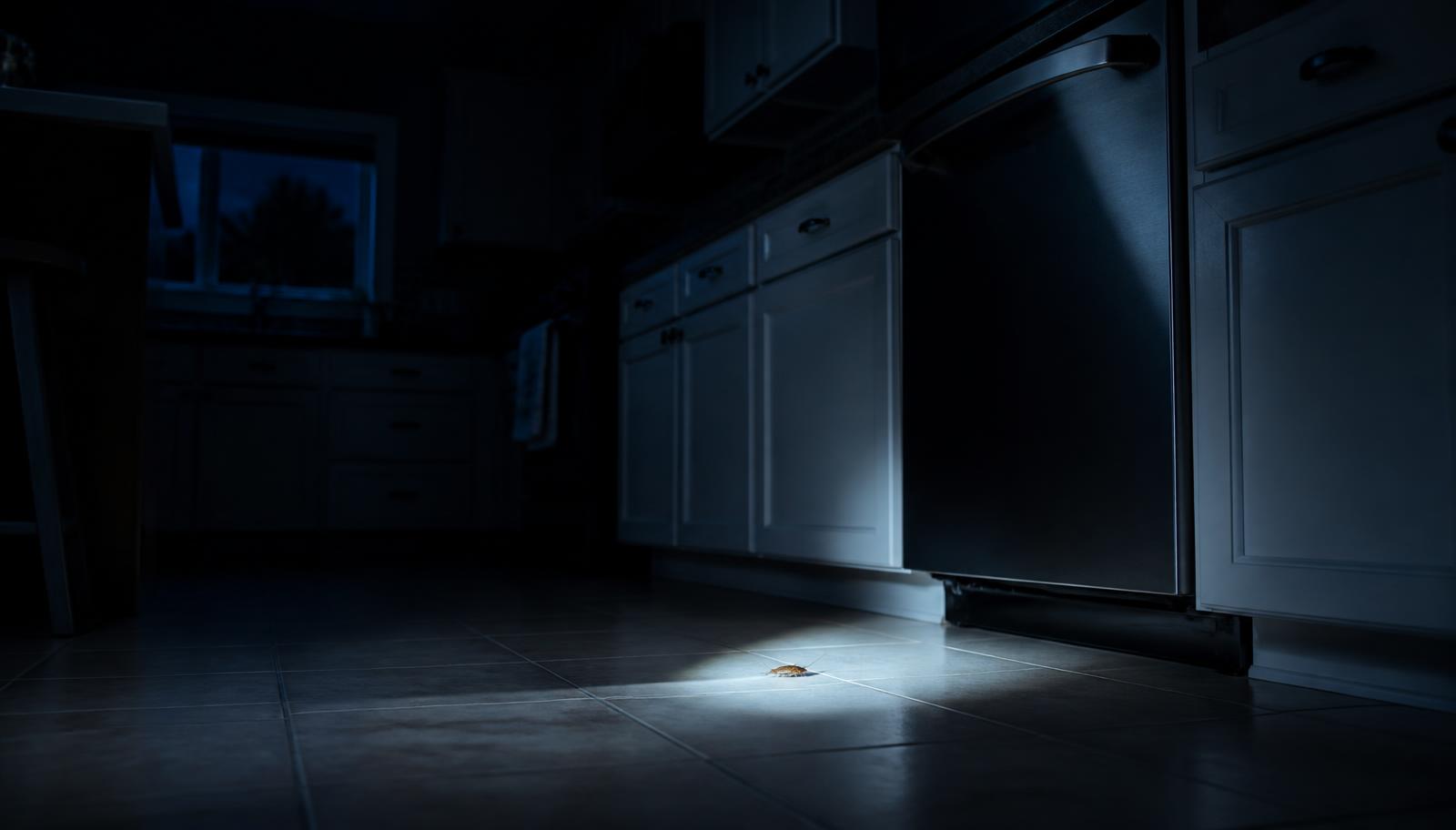
Timing is the second tell. Roaches are strongly nocturnal. When you see one strolling across the floor at 2 in the afternoon, that is usually not boldness, it is overcrowding. The good harborage spots are full and the colony is pushing members out into the open. In our experience across Nassau and Suffolk County, daytime sightings are one of the most reliable signs that a population has been building for weeks or months.
Why do I have roaches in my clean house?
Roaches show up in spotless homes because they are hunting for water, warmth, and shelter first, and food second. A dripping trap under a sink, condensation on a boiler, a warm dishwasher motor, and the tight gaps behind cabinets are worth more to a cockroach than crumbs on a counter. Cleanliness lowers the ceiling on how big an infestation can get, but it does not stop one from starting.
On Long Island the most common ways roaches enter a clean home are cardboard shipping boxes, grocery bags, secondhand appliances and furniture, a visit from an infested apartment or workplace via a bag or jacket, and, for the larger American cockroaches that people here call waterbugs, the municipal sewer lines and floor drains they travel through, especially in summer. None of those routes care how clean your countertops are, so drop the embarrassment. Some of the tidiest kitchens we treat in Nassau County belong to people who apologized to us at the door.
How do I know if I have a cockroach infestation?
The main signs of a cockroach infestation are droppings that look like coarse black pepper or coffee grounds in drawers and along cabinet edges, brown egg cases about a quarter inch long, smear marks along baseboards, a musty oily odor in enclosed spaces, and live or dead roaches inside cabinet hinges, under the sink, or behind the refrigerator. Any two of these together justify treatment, not more waiting.
The fastest self-check costs nothing. Go into the kitchen at 1 AM, flip on the light, and watch the floor line and counter backsplash for movement. Then open the cabinet under the sink with a flashlight and check the hinges, the corners, and the underside of the counter. German cockroaches cluster where water and warmth meet, so the dishwasher kick plate and the gap beside the stove are the two spots we check first on every Long Island inspection.
What kind of cockroaches are in Long Island homes?
Three cockroaches cause nearly all Long Island infestations: the German cockroach, a half-inch tan roach with two dark stripes that breeds indoors in kitchens and bathrooms, the American cockroach, the big reddish-brown "waterbug" that comes up from sewers and basements, and the Oriental cockroach, a dark, slow roach found in damp basements and crawl spaces. Which one you have completely changes what your sighting means.
The German cockroach is the one that should worry you. It reproduces faster than any other house roach, each female produces an egg case holding roughly 30 to 40 eggs, and she carries it with her until just before hatching, which is why sprays that kill adults still leave the next generation behind. A German roach sighting is a colony question, never a lone-visitor question.
The American and Oriental cockroaches are usually a building and moisture story rather than a sanitation story. In Nassau and Suffolk we see them surge after heavy rain and in homes with older sewer laterals, sump pits, and unfinished basements. One waterbug in the basement in July is common. Several a week means they have found a gap, a dry floor drain, or a moisture problem worth sealing.
Do cockroaches go away on their own?
No. An indoor cockroach population does not leave on its own, because your home supplies everything it needs year-round: water, warmth, food, and thousands of hiding spots. German cockroaches cannot survive Long Island winters outdoors, which means they have nowhere to go and no reason to leave. Left alone, an infestation only compounds.
The math is the hard truth here. With an egg case of 30 to 40 eggs and a new generation possible in under two months in a warm kitchen, a handful of roaches in spring can be hundreds by the holidays. Every week of waiting raises the population, spreads them from the kitchen into bathrooms and bedrooms, and makes the eventual treatment slower. We would rather treat one room in August than a whole house in December, and so would your wallet.
What should you do if you see one cockroach?
Work the first 48 hours in order: do not spray, identify the roach, log where and when you saw it, dry the area out, set sticky monitors, and escalate to a professional inspection if the monitors catch anything. Those six steps tell you honestly whether you saw a wanderer or the edge of a colony.
If you just saw one, here is exactly what to do, in this order:
- Do not spray it with a repellent bug spray. Kill it with a shoe or paper towel if you can. Spraying feels productive but it scatters survivors deeper into the walls and contaminates the areas where bait would have worked.
- Identify or photograph it. Small and tan with two dark stripes means German cockroach and a likely indoor colony. Large and reddish-brown means American cockroach and a likely entry from the sewer, drain, or exterior.
- Note where and when you saw it. Kitchen at 2 PM is a very different signal than basement floor drain at midnight, and it tells the inspector exactly where to look first.
- Dry out the area for a few nights. Fix drips, wipe the sink dry before bed, and run a dehumidifier in damp basements. Removing water pressure-tests how established they are.
- Put down a few sticky monitor traps along walls, under the sink, and beside the stove. Forty-eight hours of trap results will tell you honestly whether it was one roach or a population.
- If a monitor catches roaches, you see a second one, or the first one was German, get a professional inspection. On Long Island, Bobby Bugs does free quotes, so confirming the situation costs you nothing.
Why do DIY roach sprays make infestations worse?
Over-the-counter roach sprays and foggers are repellents, and repellents scatter German cockroaches instead of eliminating them. Roaches that survive a spray relocate deeper into wall voids and into new rooms, gravid females carry their egg cases with them, and the chemical residue left behind repels roaches away from the gel baits that actually wipe out colonies. This is how a one-room kitchen problem becomes a whole-house problem.
We are not against homeowners trying things, but we walk into Long Island kitchens every month where months of store-bought spraying made everything harder. Professional roach work is mostly not spraying. It is targeted gel baits the roaches carry back and share, insect growth regulators that stop nymphs from ever reproducing, dusts inside the voids where they actually live, and follow-up until monitors read zero. That combination kills the colony, not just the individuals brave enough to cross your counter.
How much does a roach exterminator cost on Long Island?
Roach cost on Long Island is driven by square footage, how long the population has been building, whether it is an apartment or a single family house, and how many follow-up visits the job needs. National averages published online rarely match Long Island reality. Bobby Bugs quotes every job in writing, for free, before any work begins, and the price on the invoice matches the quote. Every roach treatment carries a 60-day written guarantee.
National cost guides average across regions, roach species, and building types that have nothing to do with a Nassau or Suffolk kitchen, and many companies quote low then bill every follow-up visit as an extra. We quote the whole outcome instead. German cockroach jobs routinely need more than one visit, and the 60-day written guarantee means those follow-ups are our problem, not a new line item on your bill. You know the number before we start.
Roaches are one part of what we handle. You can browse our full list of pest control services, and if you are also hearing scratching in the walls, read our guide to mice on Long Island.
Frequently Asked Questions
Is one cockroach at night a big deal?
A single sighting at night is less alarming than one in daylight, since roaches normally forage after dark. It still deserves 48 hours of attention: identify the roach, set a couple of sticky monitors, and see what they tell you. If it was a German cockroach, assume there are more regardless of the hour.
What kills cockroaches instantly?
Direct contact sprays and even soapy water can kill an individual roach on the spot, but nothing that kills instantly solves an infestation, because the colony and its egg cases are hidden in walls and voids where sprays never reach. Colony elimination comes from gel baits, insect growth regulators, and void treatments, which work over days, not seconds.
How long does professional roach treatment take to work?
Expect a major knockdown within the first one to two weeks and full control of a German cockroach infestation in roughly two to four weeks, including a follow-up visit. Seeing some roaches in the first days after baiting is normal and actually means the bait is being found and shared.
Do cockroaches mean my house is dirty?
No. Roaches follow water, warmth, and shelter, and they enter clean homes through boxes, bags, used appliances, and drains. Housekeeping affects how fast an infestation grows, not whether one can start.
Are German cockroaches harder to get rid of than other roaches?
Yes. German cockroaches breed entirely indoors, reproduce faster than any other house roach, and protect their egg cases until hatching, so surface sprays consistently fail against them. They are the number one reason DIY roach control fails on Long Island.
How should I prepare my home for roach treatment?
Empty the cabinets under and around the kitchen sink, clear the floor along kitchen and bathroom walls, wipe down counters, and hold off on spraying any store-bought products before the visit, since repellent residue can sabotage the baits. We confirm exact prep when the appointment is booked.
What does the Bobby Bugs 60-day roach guarantee cover?
If roaches return within 60 days of your treatment, we come back and re-treat at no additional cost. The 60-day written guarantee is included in the quoted price of every roach job, apartment or house, and it is printed on the invoice.
Saw a roach and want a straight answer? Get a free quote today.
Nassau and Suffolk County homeowners: send us a photo or describe what you saw, and we will tell you honestly whether it needs treatment or just a monitor and a dry sink. A free written quote, a 60-day written guarantee, and a licensed applicator answering the phone, not a call center.
This article is general pest information for Long Island homeowners, not a diagnosis of your specific situation. Pest behavior varies by home, season, and species, and every job is quoted in writing before any work begins. Pesticide applications are performed by licensed New York State applicators in accordance with label requirements.