How to Get Rid of Squirrels in the Attic on Long Island: What Works, What's Legal, and Why Trapping Alone Fails (2026)
By the Bobby Bugs Team, Licensed New York State Pest Control Applicators, Serving Nassau, Suffolk, Queens & The Bronx
11 min read
Key takeaways
- Squirrels are daytime animals. Scratching and scampering at dawn and dusk is squirrels. Heavy thumping in the middle of the night is more likely a raccoon, and that changes the job.
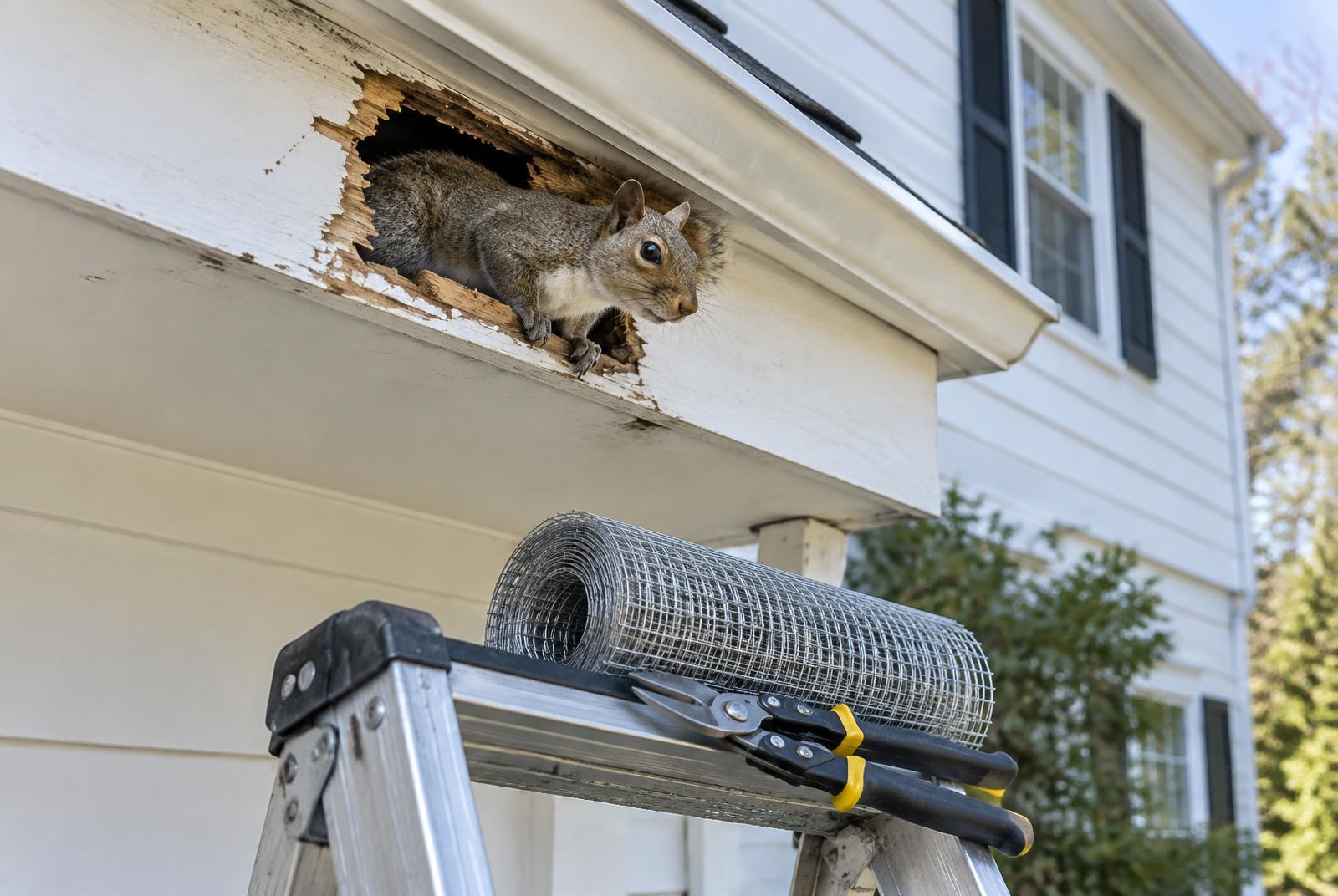
- A gray squirrel needs a hole about the size of a golf ball and will chew a smaller one bigger. Rotted fascia, roof vents, and the gap where the gutter meets the roofline are the top three entries on Long Island.
- Trapping without sealing fails. The attic is the resource. Remove one squirrel and another moves in within weeks.
- Gray squirrels raise litters born around March and around August, and the young do not leave the nest until 6 to 7 weeks old. Sealing during those windows can lock helpless young inside.
- New York lets a homeowner deal with squirrels damaging their own home, but doing it for hire requires a state nuisance wildlife license, and captured animals cannot simply be driven to a park and released.
- Most Bobby Bugs attic jobs are functionally done in 5 to 14 days, sealed with metal, and carry a 6-month written guarantee.
How do you get rid of squirrels in the attic?
You get squirrels out of an attic in three steps that have to happen in this order: find every entry point, remove the animals with live traps or a one-way exclusion door mounted over the main hole, and then seal every opening with galvanized wire mesh or sheet metal. Skip the first step and you seal the wrong hole. Skip the third and the next squirrel is in by spring.
In thirty five plus years of doing this in Nassau and Suffolk, the most common attic call is not a squirrel problem. It is a hole problem. The squirrel is just the animal that found it first. Homeowners who buy a trap at the hardware store, catch one squirrel, and call it done are calling us six months later with a bigger family upstairs, chewed wiring, and insulation packed flat with droppings.
The hard truth is that the animal is the easy part. A gray squirrel in a cage trap is a two or three day job. Finding the second and third holes you did not know about, getting up on the roofline to fix rotted fascia, and screening every vent so the fix holds through next winter is where the work is. That is why we price the sealing, not the squirrel.
How do I know if it is squirrels in my attic and not something else?
Squirrels are active in daylight, so if the noise is scratching, scurrying, and rolling sounds at first light and again in the late afternoon, it is almost certainly squirrels. Raccoons are nocturnal and heavy, so slow thumping and dragging after dark points to a raccoon. Mice are constant light scratching at night, and birds are chirping and fluttering near a vent.
Two other tells. Squirrels leave chewed openings with fresh, light colored wood showing at the edge, and they pack leaves and shredded insulation into a ball-shaped nest in a corner or against the chimney. Raccoons leave a single hole with fur on the edges, flatten a larger area of insulation, and often use one corner as a latrine. Getting the animal right matters because a raccoon in New York is a rabies vector species handled under different rules, and a mother raccoon with kits in April is not something anyone should be trapping casually. If the noise is at night and heavy, read our wildlife removal page before doing anything.
How do squirrels get into the attic in the first place?
Squirrels get into Long Island attics through the roofline, not the ground. The top entries we find are rotted or gapped fascia boards behind the gutter, uncapped or plastic roof vents, gable vents with torn screening, the open corner where two rooflines meet, and soffit panels that have pulled away from the wall. A squirrel can fit through a hole about 1.5 inches across and will chew a smaller gap bigger.
The route to the roof is almost always a tree. Any branch within 8 to 10 feet of the roof is a runway, and on the older colonials and capes in Nassau and Suffolk that is most of the block. Squirrels also climb brick, wood siding, downspouts, and cable lines with no trouble. A house with a mature oak over it, gutters full of leaves, and thirty year old fascia is a squirrel house whether or not one has moved in yet.
Is it legal to trap and relocate squirrels in New York?
A New York homeowner may deal with gray, black, and fox squirrels that are damaging their own dwelling, at any time, under Environmental Conservation Law section 11-0523. Trapping wildlife for hire on someone else's property requires a New York State Nuisance Wildlife Control Operator license under section 11-0524. Relocation is restricted: the state controls where a captured animal can be released, licensed operators must check traps every calendar day and remove animals within 12 hours of capture, and raccoons and skunks fall under separate health department rules because of rabies.
This is where a lot of well meaning homeowners get it wrong. The picture in their head is catching the squirrel and driving it to a park ten miles away. New York does not treat nuisance wildlife that way, and a squirrel dumped in unfamiliar territory in November generally does not survive it anyway. We are not lawyers and this is not legal advice. It is how we run every job so the homeowner never has to think about it.
The practical version is simple. If you want to handle it yourself on your own house, you can, and the sealing is the part that matters. If you hire someone, ask two questions: are you licensed by New York State for nuisance wildlife, and how do you handle the animals after capture. A company that hesitates on either one is a company you do not want on your roof.
When should you NOT seal a squirrel hole?
Do not seal any opening between roughly March and May or August and October unless you have confirmed there are no young in the attic. Gray squirrels in New York have two litters a year, born around March and again around August, and the young do not leave the nest until they are 6 to 7 weeks old. Sealing with a litter inside means the mother chews a new hole to get back to them, or the young die in the wall.
We have opened walls in Suffolk County in June to find exactly that, and the smell tells you the sealing job was done in April by someone who did not check. It is the single most expensive mistake in squirrel work because now you have a dead animal problem, a drywall problem, and the original hole problem all at once.
Outside those windows, or once we have confirmed the attic is empty, sealing is done the same day the last animal comes out. In the birthing windows we use a one-way door over the main entry and give the mother time to move her young, then seal. It adds days, not weeks, and it is the difference between a fix and a disaster. Never use spray foam alone. Squirrels chew through it in an afternoon.
How does Bobby Bugs get squirrels out of an attic?
Here is how Bobby Bugs gets squirrels out of an attic.
- Free phone assessment. We ask when you hear the noise, where in the house, and whether you have seen animals on the roof. Most attic jobs are quoted from that call; larger jobs get a free on-site inspection.
- Full inspection. We walk the roofline, soffits, vents, chimney, and attic interior to find every entry point, confirm the species, and check for young.
- Removal. Depending on the season and the layout we set live traps at the entry or mount a one-way exclusion door over the main hole so squirrels can leave and not return. Traps are checked every day as New York requires.
- Sealing with metal. Every opening is closed with galvanized wire mesh or sheet metal, fascia gaps are screened, and vents get metal covers. This is the step that ends the problem, and it is what the guarantee covers.
- Exterior 10-day trapping where needed. For animals living under decks, in sheds, or in the yard rather than inside the house, we run a 10-day exterior trapping program.
- Written 6-month guarantee. If a squirrel gets back into a sealed structure within 6 months, we come back at no charge. Exterior trapping programs are not guaranteed because the yard cannot be sealed.
How do you keep squirrels out of the attic for good?
Keep squirrels out by taking away the route and the door. Trim every branch back at least 8 feet from the roofline, replace rotted fascia and screen the gap behind the gutter, put metal covers on roof and gable vents, cap the chimney, and screen the soffit returns. A house with no openings and no runway is not a squirrel house.
The bird feeder is the part nobody wants to hear. A feeder within sight of the house is a squirrel buffet that keeps a dozen animals on the property year round, and the one that eventually notices your fascia was fed by you. Move it well away from the house or take it down in fall when they start looking for winter dens.
Walk the outside of the house every October with binoculars and look at the roofline. Fresh chew marks, a dark stain where an animal has been rubbing at a corner, or a vent screen that has come loose is your warning. Fixing it in October costs a ladder and a piece of mesh. Finding out in March costs a trapping job, and it may cost a wall.
How much does it cost to get squirrels out of an attic on Long Island?
Squirrel removal cost on Long Island depends on how many entry points the roofline has, how much fascia or vent repair the sealing requires, whether there are young in the attic, and whether the animals are inside the house or living outside under a deck or shed. Bobby Bugs quotes every job in writing, for free, before any work begins, the invoice matches the quote, and attic jobs carry a 6-month written guarantee.
For context, national cost surveys put general wildlife removal at roughly $200 to $600 and animals in an attic at $500 to $1,500, and the spread is almost entirely the sealing work. Be careful with two kinds of pricing. The first is the low per-animal trapping fee that does not include exclusion. That is the cheapest way to pay for the same squirrel problem twice. The second is the open-ended per-visit charge with no written scope. Ask any quote one question: does the price include sealing every entry point with metal, and is it guaranteed? See our wildlife removal service for the full scope. If the noise is light and constant at night rather than at dawn and dusk, you are more likely dealing with mice in the attic, which is a rodent job with a different playbook.
Frequently Asked Questions
How long does it take to get squirrels out of an attic?
Most Long Island attic jobs are functionally done in 5 to 14 days. Trapping or one-way door exclusion usually clears the animals in a few days, and sealing follows immediately or on a scheduled return. Jobs during the March and August birthing windows can take longer because the young have to be out before anything is sealed.
Will squirrels leave the attic on their own?
Not while it is warm, dry, and open. Squirrels leave to feed during the day and come back to sleep and nest. Some move out on their own in late spring once the young are grown, but the hole is still there, and the attic gets reoccupied the next fall.
Do mothballs or ultrasonic repellents get rid of squirrels in the attic?
No. Squirrels tolerate both, and mothballs in an occupied house are a health issue for the people living there. The only method that works long term is removing the animals and sealing every entry point with metal.
Can I trap squirrels in my attic myself in New York?
A homeowner may take gray, black, or fox squirrels that are damaging their own dwelling under New York Environmental Conservation Law section 11-0523. What you cannot do is ignore the state's rules on where captured animals go, and you should not seal anything until you are sure no young are inside. If you hire it out, the company needs a New York State nuisance wildlife control license.
What damage do squirrels do in an attic?
They chew wiring, which is a fire risk, gnaw wood framing and PVC, shred insulation for nesting, and soak it with urine and droppings. They also chew new exit holes from the inside, which is why a squirrel that has been in the attic all winter often leaves two or three openings where there was one.
What does a squirrel in the attic sound like?
Fast scratching, scampering, and rolling sounds, mostly at dawn and again in the late afternoon, sometimes with a chirping or chattering sound. Heavy, slow thumping after dark is more likely a raccoon, and light constant scratching at night is more likely mice.
Do you relocate the squirrels?
New York State rules control how nuisance wildlife is handled after capture, including where and whether it can be released, and raccoons and skunks fall under separate health department rules. Bobby Bugs follows the current state rules on every job and explains exactly what happens to the animals before work starts.
Scratching in the ceiling at sunrise? Get the animals out and the roofline sealed before they chew a second hole.
Nassau and Suffolk homeowners: we identify what is up there, find every entry point on the roofline, remove the animals within New York's wildlife rules, seal with metal, and put the price in writing before any work starts. Most attic jobs are done in 5 to 14 days with a 6-month written guarantee on the sealed structure.
This article is general pest information for Long Island homeowners, not a diagnosis of your specific situation. Pest behavior varies by home, season, and species, and every job is quoted in writing before any work begins. Pesticide applications are performed by licensed New York State applicators in accordance with label requirements.