How Much Does a Rat Exterminator Cost on Long Island? Real Numbers From a Local Company (2026)
By the Bobby Bugs Team, Licensed New York State Pest Control Applicators, Serving Nassau, Suffolk, Queens & The Bronx
9 min read
Key takeaways
- Bobby Bugs quotes rat work in writing, for free, before any work begins, anywhere in Nassau or Suffolk County, with a 60-day written guarantee.
- Rats cost more than mice to exterminate because the job uses different equipment: heavier traps, exterior tamper-resistant bait stations, and more aggressive sealing work.
- The most expensive way to buy rat control is per visit. Open-ended monthly billing with no defined end point can quietly double or triple the real cost of the job.
- A poison-only service is a red flag. Without sealing the entry points, new rats replace the ones removed and the bill keeps running.
- Most Long Island rat jobs are functionally resolved in 14 to 30 days, with activity dropping sharply in the first week.
- Never pay for a job that does not come with a written guarantee. Ours is 60 days: if rats come back inside that window, so do we, free.
How much does a rat exterminator cost on Long Island?
Rat cost on Long Island is driven by property size, how established the burrow system is, apartment versus single family house, the number of exterior bait stations needed, and the follow-up visits required to reach zero activity. National averages published online often do not match Long Island reality. Bobby Bugs quotes every job in writing, for free, before any work begins, the invoice matches the quote, and the work carries a 60-day written guarantee.
National cost guides quote enormous ranges for rat extermination once inspection fees, exclusion work, and follow-up visits get added as separate charges. Those guides are averaging all fifty states and every billing model at once, which makes them nearly useless for pricing a specific job on a specific Long Island property. The honest way to price rat work is the way we do it: one flat number for the job, quoted free, before anyone touches a trap.
We will be straight with you about why the flat number exists. Rat work rewards companies that drag it out. Every extra visit is another line item, and an unsealed entry point guarantees the next visit. Folding the follow-ups and the sealing into one price puts the pressure where it belongs, on us, to finish the job. If a company cannot tell you the total cost to get to zero activity, they are not quoting a solution, they are quoting a subscription.
Why does rat extermination cost more than mice?
Rat extermination costs more than mouse work because rats require heavier equipment and more of it: larger snap traps, locked exterior bait stations placed along travel routes, and more serious exclusion work, since a rat can gnaw through soft mortar and low-grade plastic that would stop a mouse. Rats also burrow outdoors, which mice on Long Island rarely do.
Norway rats, the dominant species in Nassau and Suffolk, live at ground level and dig burrows under decks, sheds, and foundation lines, so a proper rat job treats the outside of the property as seriously as the inside. That exterior program, and the tamper-resistant hardware it runs on, is the real cost difference. If you are not sure which rodent you have, the short version is that rats leave capsule-shaped droppings about the size of a raisin and mice leave rice-sized ones, and we cover the full comparison in our article on how exterminators get rid of mice.
What is included in a rat extermination job?
The quoted price covers triage and inspection, interior trapping, exterior locked bait stations, sealing of accessible entry points, and follow-up inside the 60-day guarantee window. Each step exists because rat control fails when any one of them is skipped.
Here is exactly what the quoted price buys at Bobby Bugs, and the reason each step exists.
- Free phone triage and site walk. We confirm rats versus mice, map burrows, droppings, and rub marks, and give you the price in writing before any work starts.
- Interior trapping. Snap traps and multi-catch traps go directly in the active runs inside the home. Interior work relies on traps, not bait, so nothing dies in a wall void and stinks up the house for weeks.
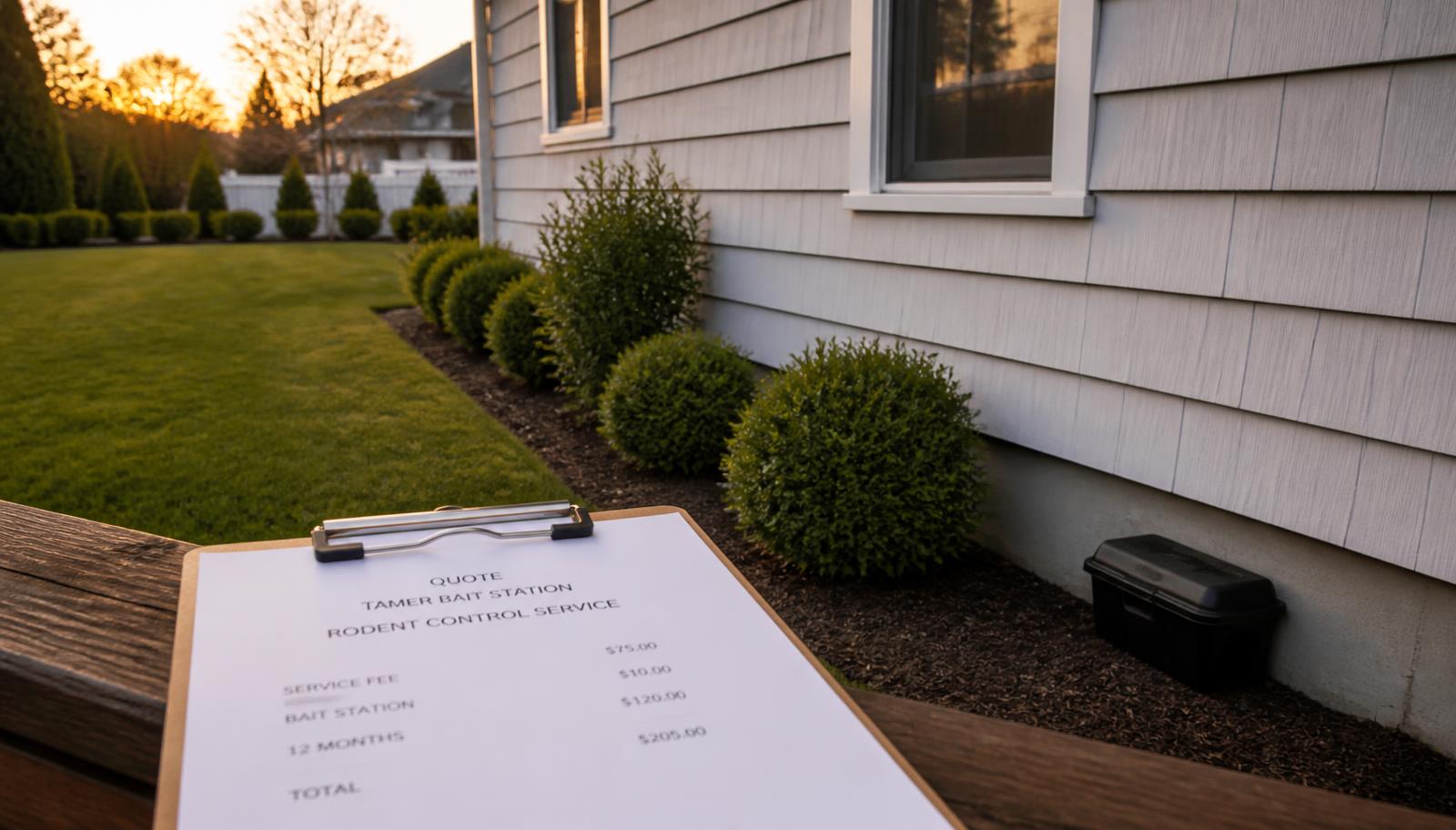
- Exterior bait stations. Locked, tamper-resistant stations are placed along the active outdoor travel routes, including a decorative rock style that blends into landscaping. The bait stays away from kids, pets, and non-target wildlife, and the station count is written into your quote.
- Sealing the entry points. Gaps as small as a half inch get closed with heavy hardware cloth, mortar, and door sweeps. This is the step that makes results permanent, and the step cheap quotes leave out.
- Follow-up inside the 60-day window. We inspect the stations, remove trapped animals, refresh what needs refreshing, and confirm activity has stopped. If rats return within 60 days of treatment, we return free.
How much do rat bait stations cost, and do they actually work?
Bait station cost depends on how many stations the property needs and whether you want the standard or the decorative rock style, and the count is written into the quote before any work begins. They work when two conditions are met: placement on routes rats already use, and service on a schedule. A station dropped in a random corner and never checked again is lawn decoration.
The locked station is what makes exterior baiting responsible on a residential property. Children and pets cannot reach the bait, and neither can the owls and hawks that hunt Long Island yards. Properties near shorelines, restaurants, dumpsters, or active construction often keep stations in service after the initial job, because those neighborhoods face constant reintroduction pressure, and an established station line intercepts new arrivals before they reach the house.
How long does it take to get rid of rats?
Most Long Island rat jobs show a sharp drop in activity within the first week and are functionally resolved in 14 to 30 days once the property is trapped, baited on the exterior, and sealed. Interior signs usually stop first, with the exterior stations working through the outdoor population over the following weeks.
What stretches a rat job past a month is almost never the trapping. It is pressure from outside the property line: a shoreline, a restaurant row, a neighbor's open trash, or municipal construction pushing rats around the block. That is exactly what the 60-day written guarantee exists for. If activity returns inside the window, the return visit costs you nothing, and if your block faces ongoing pressure, we will tell you honestly whether ongoing station service makes sense instead of pretending one treatment fixes a neighborhood problem.
Can I get rid of rats myself and skip the cost?
You can remove some rats yourself with heavy snap traps, and if you catch the problem at the very first dropping, sealing the obvious gaps and trapping aggressively can work. What homeowners cannot safely replicate is the exterior bait station program and the full exclusion sweep, and DIY poison in a house is the mistake we get called to clean up after.
The DIY failure pattern on Long Island is consistent. A homeowner buys consumer bait, the rats die inside a wall or crawl space, the smell arrives a week later, and the entry points are still open, so the next rats are already moving in while the house still smells like the last ones. Consumer-grade sealing fails the same way: foam and steel wool alone get chewed through within a season, which is why we seal with heavy hardware cloth and mortar.
The honest math is this. A weekend of hardware store supplies runs real money, costs you the hours, and leaves the two highest-value steps undone. If the droppings are raisin-sized, there is a burrow in the yard, or you have seen a rat in daylight, which usually means an established population, the flat quote is free and the guarantee means you are not paying twice for the same problem.
What attracts rats to a Long Island property?
Rats show up where food, water, and cover line up: unsecured trash, pet food and bird seed, fallen fruit and grill scraps, bad compost, and dense cover or firewood against the siding.
Rats show up where food, water, and cover line up. The usual Long Island draws are unsecured trash in thin plastic cans, pet food and bird seed left out overnight, fallen fruit and grill scraps in summer, compost done wrong, and dense ground cover or firewood stacked against the siding. South Shore properties with sandy soil make easy burrowing, and homes near shorelines, docks, restaurants, or big infrastructure projects see more rat pressure than wooded inland streets, where mice dominate instead.
The fix side is unglamorous and effective. Metal or heavy plastic cans with tight lids, feeding pets indoors, picking fruit and scraps daily, moving firewood at least twenty feet from the house, and screening crawl space vents with quarter-inch hardware cloth. Every rat job we finish comes with a written prevention checklist, because the cheapest rat treatment is the one you never need.
How do you avoid overpaying a rat exterminator?
Get a flat total price in writing, a written guarantee with a number of days on it, and a clear statement that entry-point sealing is included. Those three things defeat every billing pattern that inflates rat control costs.
Three billing patterns quietly inflate rat control costs. The first is open-ended per-visit pricing, where nobody defines what done means and the visits never end. The second is the poison-only plan, which skips exclusion entirely, guarantees repeat business, and risks dead rats in wall voids. The third is the vague verbal quote that grows once the crew is on site. The defense against all three is the same: a flat total price in writing, a written guarantee with a number of days on it, and a clear statement that entry-point sealing is included.
Ask any company three questions before hiring them. What is the total price to get to zero activity? Is sealing included in that price? What happens if rats come back in 60 days? At Bobby Bugs all three answers are on the written quote: one number for the whole job, sealing included, and if rats return within 60 days, we do too, free. Compare any competing quote against those three answers and the overpriced ones eliminate themselves. You can see the full breakdown of what we treat and how on our rat exterminator on Long Island service page, or browse our full list of pest control services.
Frequently Asked Questions
Is it worth getting an exterminator for rats?
Yes, and the further along the problem is, the more clearly yes. Rats breed quickly, gnaw wiring, contaminate food areas, and dig burrows that undermine slabs and sheds. A professional job pairs trapping with sealed entry points and locked exterior stations, which is the combination that actually ends the problem instead of managing it forever.
How do exterminators get rid of rats?
Professionals combine interior snap trapping along active runs, locked exterior bait stations on outdoor travel routes, and exclusion work that seals every accessible entry point with heavy hardware cloth and mortar, followed by scheduled follow-ups until activity reads zero. Poison alone is not a professional plan, it is a repeat appointment.
Does seeing one rat mean I have an infestation?
Take one sighting seriously, especially in daylight. Rats are nocturnal and cautious, so a rat bold enough to be visible at noon usually indicates an established population competing for food. One sighting plus droppings or fresh burrow dirt is enough to justify an inspection, and ours are free.
What is the difference between rats and mice in my house?
Rats are larger, leave capsule-shaped droppings about the size of a raisin, and travel along foundations and pipes, often burrowing outdoors. Mice leave rice-sized droppings and favor tight interior spaces. Homes near shorelines, docks, and restaurants see more rats, while wooded suburban streets see more mice.
Does homeowners insurance cover rat extermination?
Generally no. Standard homeowners policies treat rodent infestations and the damage they cause as a maintenance issue rather than a covered peril, so extermination and gnawing damage usually come out of pocket. Check your specific policy, but budget as if the answer is no.
Are rat bait stations safe for kids and pets?
The stations we use are locked and tamper-resistant, so children and pets cannot reach the bait inside, and they are placed and serviced by licensed New York State applicators in line with the product label. Loose consumer poison tossed in a garage is the dangerous version, and we do not use it.
What does the Bobby Bugs 60-day rat guarantee cover?
If rat activity returns within 60 days of your treatment, we come back and re-treat at no additional cost. The 60-day written guarantee is included in the quoted price of every rat job, apartment or house, and it is printed on the invoice alongside the station count.
Droppings, burrows, or something moving along the fence line? Get a flat quote before the colony digs in.
Nassau and Suffolk County homeowners: tell us what you are seeing and we will tell you honestly whether it is rats or mice, what it takes to fix it, and the price in writing before we start. Trapping, sealed entry points, locked bait stations, and a 60-day written guarantee, from a licensed applicator who answers his own phone.
This article is general pest information for Long Island homeowners, not a diagnosis of your specific situation. Pest behavior varies by home, season, and species, and every job is quoted in writing before any work begins. Pesticide applications are performed by licensed New York State applicators in accordance with label requirements.