Do You Need a Termite Inspection When Buying a House on Long Island? What Buyers, Sellers, and VA Borrowers Should Know (2026)
By the Bobby Bugs Team, Licensed New York State Pest Control Applicators, Serving Nassau, Suffolk, Queens & The Bronx
9 min read
Key takeaways
- No New York law forces a termite inspection at closing. Lenders set the real requirement, and VA loans in our area effectively mandate one.
- The NPMA-33 is the standardized wood destroying insect report lenders ask for, and it is typically expected to be dated within 90 days of closing.
- A general home inspection is not a termite inspection. Home inspectors note what they happen to see; a licensed applicator goes looking for mud tubes, damaged framing, and moisture conditions on purpose.
- Long Island is heavy subterranean termite territory, and the eastern subterranean termite does its damage inside the wood where a quick glance never reaches.
- Inspection cost depends on the size and accessibility of the home and is quoted before it is scheduled. If activity is found, treatment is quoted in writing too, with a 1 year guarantee on partial treatments and 2 years on full treatments.
- Finding termites during a purchase is not a reason to walk away from a good house. It is a negotiating tool. Treatment costs are known, and the seller often ends up covering them.
Do you need a termite inspection when buying a house in New York?
New York does not legally require a termite inspection to close on a house. The requirement, when there is one, comes from your lender. Conventional lenders may ask for a wood destroying insect report if the appraisal or home inspection notes possible damage, and VA loans on Long Island generally require one on every purchase because our region sits in a zone where termite infestation probability is rated moderate to heavy.
Here is the part that surprises buyers. The standard home inspection most people pay for is not a termite inspection. Home inspectors are generalists. They will flag obvious damage if they happen to see it, but they are not licensed applicators, they are not probing sill plates, and many home inspection contracts specifically exclude wood destroying insects. Buyers regularly close on Long Island homes believing termites were checked when nobody ever actually looked.
We will be straight with you: on a wood frame house in Nassau or Suffolk County, skipping a termite inspection to save a small amount on the largest purchase of your life is a bad trade. Subterranean termites are established across Long Island, they work from the soil up into the framing, and the damage they do is hidden until it is expensive. This is the cheapest insurance in the entire transaction.
What is an NPMA-33 form, and who needs one?
The NPMA-33 is the standardized Wood Destroying Insect Inspection Report developed by the National Pest Management Association. It is the form lenders mean when they ask for a “termite letter.” A licensed pest control professional completes it after inspecting the home, recording whether there is visible evidence of termites, carpenter ants, carpenter bees, or other wood destroying insects, any visible damage, and any evidence of previous treatment.
VA loans are where the NPMA-33 comes up most on Long Island, since the VA requires a wood destroying insect inspection in areas like ours. Lenders typically want the report dated within 90 days of closing, and some want it much fresher than that. If your lender or attorney has asked you for a termite letter, that is this form, and a standalone inspection with a written report is exactly how you get it.
What does a termite inspector look for?
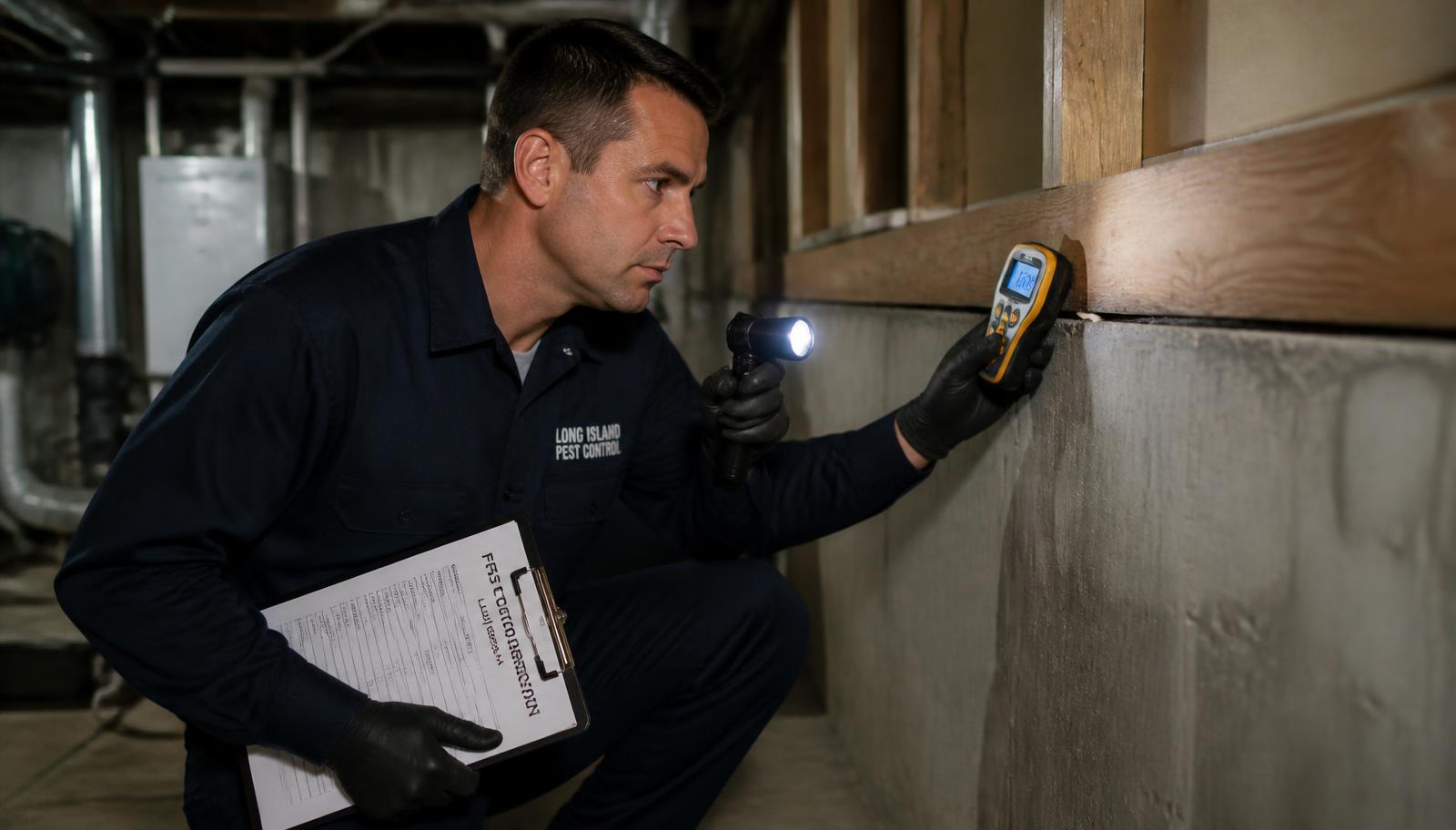
A termite inspector looks for live termites, mud tubes on foundation walls and piers, damaged or hollow-sounding wood, discarded swarmer wings, and the moisture conditions termites need. On Long Island that means close attention to the basement or crawl space, sill plates, plumbing walls, the exterior foundation line, and attached structures like garages, porches, and decks.
Here is exactly how our inspections run:
- Interior walk. We start where termites start, the basement or crawl space, then first floor plumbing walls and any framing near soil or slab. We probe suspect wood rather than just looking at it.
- Exterior walk. We follow the full foundation perimeter, checking sill plates, grade level, wood to soil contact, porches, stoops, and garages, the classic entry points on Long Island homes.
- Moisture readings. Subterranean termites follow moisture. We take readings on suspicious framing because elevated moisture tells us where to look harder and what conditions to fix.
- Documentation. Photos of everything worth noting, whether it is active termites, old damage, previous treatment evidence, or conducive conditions like mulch piled against siding.
- Written report. You get findings, photos, and recommendations in writing, delivered the same day or the next business day, in a format your lender and attorney can use.
How long does a termite inspection take?
A thorough termite inspection of a typical Long Island single family home takes 45 to 90 minutes on site. Smaller homes with unfinished basements go faster because the framing is visible. Larger homes, finished basements, and crawl spaces take longer because more of the structure has to be checked indirectly through moisture readings and accessible edges.
For a real estate deal, the timeline that actually matters is report delivery. Contracts move fast, attorneys want documents, and lenders have closing dates. Our written report goes out the same day or the next business day, which keeps the inspection from ever being the thing holding up your closing.
How much does a termite inspection cost on Long Island?
Inspection cost on Long Island depends on the size of the home, whether the basement or crawl space is finished, and how much of the framing is accessible. National averages published online often do not match Long Island reality. Bobby Bugs quotes the inspection in writing, for free, before any work begins, and the invoice matches the quote. It includes the on site inspection and a written report with photos, and carries no treatment guarantee because it is look-and-report only.
If you want the full picture on what happens after an inspection finds activity, including what partial and full treatments involve and what they cost, we broke down every number in our guide to termite treatment cost on Long Island.
What happens if the inspection finds termites?
If a termite inspection finds active termites during a home purchase, the sale does not have to die. Treatment is quoted in writing after the inspection, based on the size of the house and the extent of the activity, and it comes with a written guarantee, 1 year on partial treatments and 2 years on full treatments. In most deals the finding becomes a negotiation: the seller treats before closing, credits the cost at closing, or the price is adjusted.
The report is your leverage, which is exactly why you want it in writing with photos. A vague verbal “looks like there might be some damage” gets you nothing at the negotiating table. A documented report with photographed mud tubes and probe findings gets the repair conversation taken seriously by the seller's attorney.
The honest caveat is that visible evidence of termites is not the same as knowing the full extent of damage. Termites eat wood from the inside, so the inspection tells you activity exists and where, and a contractor may need to open walls to price structural repairs if damage looks significant. Most Long Island findings are caught early enough that termite treatment plus minor repair is the whole story.
Can a house pass a termite inspection and still have termites?
Yes. A termite inspection reports visible evidence in accessible areas on the day of the inspection. Termites working inside a finished wall, under a slab, or behind stored belongings can escape detection, which is why the industry standard NPMA-33 form itself is limited to visible evidence in accessible areas. No honest inspector will certify a house termite free.
This is not a reason to skip the inspection, it is a reason to hire someone who inspects like it matters. Probing wood instead of eyeballing it, taking moisture readings instead of guessing, and actually entering the crawl space instead of shining a flashlight from the hatch is the difference between an inspection and a drive-by. It is also why an annual inspection is cheap protection for homeowners who plan to stay: catching a colony in year one instead of year four is the difference between a routine treatment and a framing repair.
Who pays for the termite inspection, the buyer or the seller?
On Long Island the buyer typically orders and pays for the termite inspection, the same as the home inspection, because the report protects the buyer. The main exception is VA loans, where VA rules have historically addressed who may pay the pest inspection fee, so VA borrowers should confirm current rules with their lender before ordering.
Sellers sometimes order their own inspection before listing, and it is not a bad idea. A clean report is a selling point, and a problem found before listing is a problem fixed on the seller's schedule instead of discovered mid-contract with a nervous buyer attached. New York's Property Condition Disclosure Statement also asks sellers directly about wood destroying insect problems, so knowing the true answer before signing that form protects the seller too.
Frequently Asked Questions
Is a termite inspection required to buy a house in New York?
No. New York State law does not require a termite inspection to close on a home. Lenders set the practical requirement: many conventional lenders ask for one when damage is suspected, and VA loans on Long Island generally require a wood destroying insect report on the NPMA-33 form.
How long is a termite inspection good for in a real estate transaction?
Lenders typically want the wood destroying insect report dated within 90 days of closing, and some ask for 30 days. If your closing gets pushed past your lender's window, a re-inspection may be required, so time the inspection with your attorney and lender rather than ordering it the day after your offer is accepted.
What is the difference between a home inspection and a termite inspection?
A home inspection is a general review of the house by a home inspector who notes visible issues across every system. A termite inspection is performed by a licensed pest control applicator who specifically probes for wood destroying insects, follows moisture, and issues a report lenders accept. Many home inspection contracts exclude wood destroying insects entirely.
How much should a homebuyer budget for a termite inspection?
Inspection cost depends on the size of the home, whether the basement or crawl space is finished, and how accessible the framing is. National averages published online often do not match Long Island reality. Bobby Bugs quotes the inspection in writing, for free, before any work begins, and the invoice matches the quote. It includes a written report with photos delivered same day or next business day, and any treatment is quoted separately with a written 1 or 2 year guarantee.
Do sellers have to disclose termites in New York?
New York's Property Condition Disclosure Statement asks sellers directly about wood destroying insect infestation and damage, and sellers are expected to answer based on their actual knowledge. A seller who knows about termites and hides them is creating legal risk, which is one more reason inspections before listing have become common.
How often should Long Island homeowners get a termite inspection?
Once a year is the standard on Long Island. Subterranean termite colonies forage year round from soil, and an annual inspection catches mud tubes and early activity while treatment is still routine. Annual inspections matter most for homes with previous termite history, wood to soil contact, or chronic basement moisture.
What time of year do termites swarm on Long Island?
Eastern subterranean termites typically swarm on Long Island in spring, most often April through June, often after rain on a warm day. Piles of discarded wings on window sills are the classic sign. No swarm does not mean no termites; the colony feeds quietly the other eleven months of the year.
Buying a house or just want to know what is in your walls? Book a termite inspection with a free written quote up front.
Nassau and Suffolk County homeowners and homebuyers: a licensed New York State applicator inspects the home, takes moisture readings, photographs the findings, and delivers a written report the same day or the next business day. Free quotes over the phone.
This article is general pest information for Long Island homeowners, not a diagnosis of your specific situation. Pest behavior varies by home, season, and species, and every job is quoted in writing before any work begins. Pesticide applications are performed by licensed New York State applicators in accordance with label requirements.