How Much Does Termite Treatment Cost on Long Island? What You Will Actually Pay in 2026
By the Bobby Bugs Team, Licensed New York State Pest Control Applicators, Serving Nassau, Suffolk, Queens & The Bronx
10 min read
Key takeaways
- Termite treatment here is quoted free and in writing after an on-site look. National cost guides mixing in fumigation and drywood treatments will mislead you in both directions.
- Partial treatment targets the active area and carries a 1-year written guarantee. Full treatment protects the whole perimeter and carries a 2-year written guarantee. The right choice depends on what the inspection finds.
- A standalone termite inspection is quoted up front and is the cheapest decision in this entire article if you are seeing mud tubes, discarded wings, or swarmers.
- Long Island termites are eastern subterranean termites. They live in the soil, work around the clock, and do their damage from the inside of the wood out, which is why infestations run undetected for years.
- Homeowners insurance almost never covers termite damage or treatment, so the real comparison is a treatment bill now versus an uninsured carpentry bill later.
How much does termite treatment cost on Long Island?
Termite cost on Long Island is driven by the linear footage of the foundation, the size of the home, how established the colony is, and whether the job calls for a partial or a full perimeter treatment. National averages published online often do not match Long Island reality. Bobby Bugs quotes every job in writing, for free, before any work begins, and the price on the invoice matches the quote. Partial treatments carry a 1-year written guarantee, full treatments 2 years.
We quote it that way on purpose. Termite work is priced off the structure, mostly the linear feet of foundation being treated and how much of it needs trenching, drilling, or interior access, so any company quoting you a firm number over the phone without seeing the house is guessing, and you will find out which direction they guessed once the job starts. The honest structure is a free estimate, a written price, and a written guarantee, and that is how we run it across Nassau and Suffolk County.
For context, national cost guides span everything from a small spot job to whole-structure work, which is exactly why they are useless for budgeting. They average across regions, termite species, and treatment types that do not exist here. The only number that matters for a Long Island homeowner is the one written on the estimate for your foundation, and you get that before any work begins.
Why don't Long Island homes need termite tenting?
Long Island homes do not need tenting because tent fumigation treats drywood termites, which live inside the wood itself, and Long Island does not have drywood termites. Our termites are eastern subterranean termites that live in the soil beneath and around the home, so treatment goes into the ground and the structure, not over it.
This is the most common confusion we clear up on estimates, because the pictures people see online, whole houses wrapped in circus tents, come from California, Florida, and the Gulf states. If a company tries to sell tenting on a Long Island subterranean termite job, walk away. Correct treatment here means creating a treated zone in the soil the termites must pass through, and in some situations baiting systems, which is exactly what our termite treatment page describes.
What is the difference between a partial and a full termite treatment?
A partial treatment applies termiticide to the section of the structure where activity was found, and carries our written 1-year guarantee. A full treatment creates a continuous treated zone around the entire perimeter of the home, and carries our written 2-year guarantee. Full treatment costs more up front and protects against termites entering anywhere, not just where they got in this time.
Which one is right is an inspection question, not a sales question. Activity confined to one corner of a detached garage does not require treating the whole house, and a home with tubes on two sides and a history of swarms should not get a patch job. We tell you what we found, price both paths where both are defensible, and put the guarantee in writing either way. After the guarantee period, an annual inspection keeps eyes on the foundation for a fraction of the cost of re-treatment.
What is included in a termite treatment?
A Long Island termite treatment covers a full inspection and mapping of the structure, trenching and soil treatment along the foundation, drilling where slabs block access, targeted interior treatment where activity calls for it, a written guarantee, and a walkthrough of the conditions to correct.
Here is what a complete termite job on a Long Island home actually includes, start to finish.
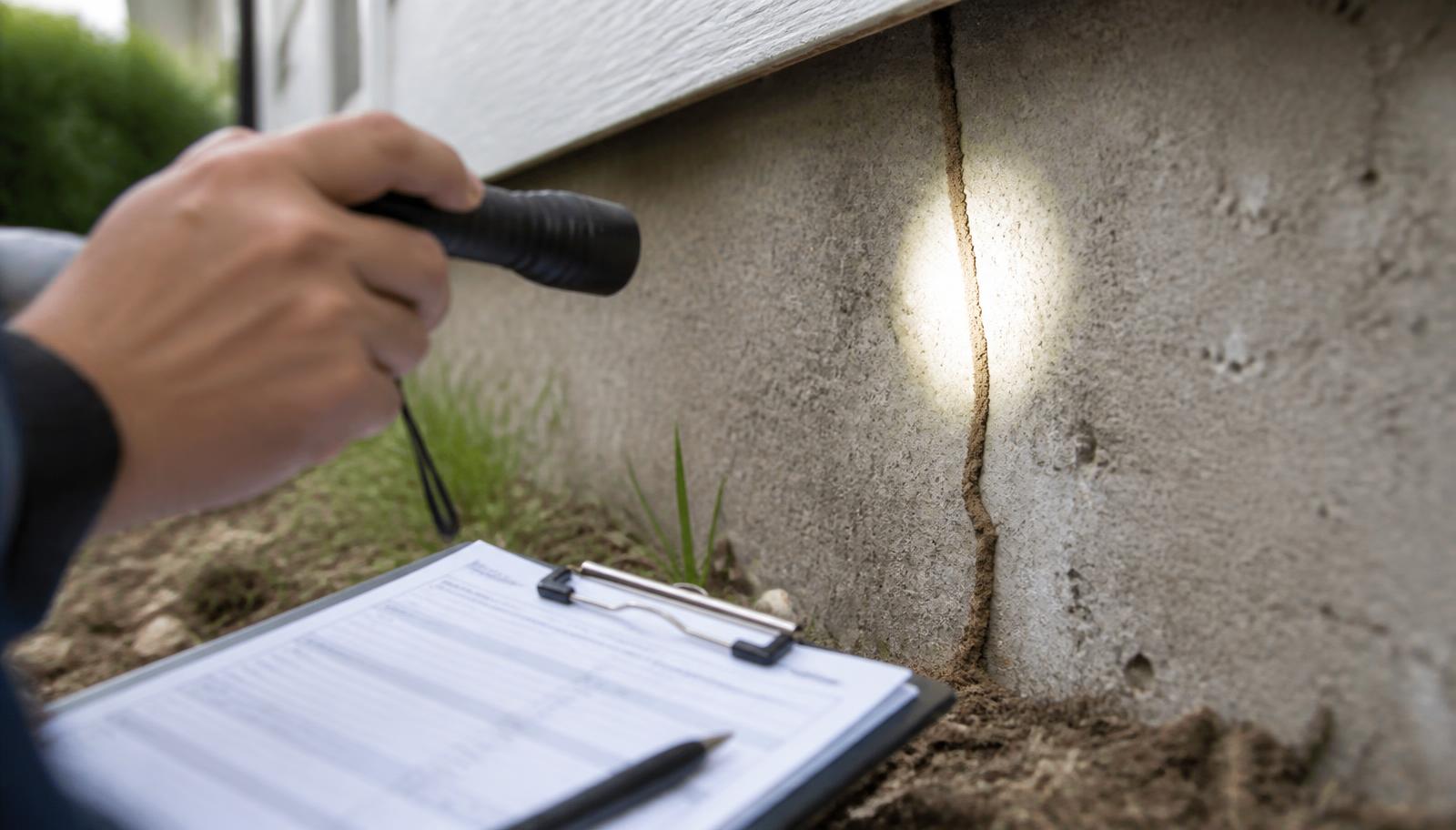
- Full inspection and mapping. Foundation walls, sill plates, crawl spaces, garage slabs, and the exterior grade, locating tubes, damaged wood, and moisture conditions that invite termites.
- Trenching and soil treatment. A trench along the foundation where the termiticide is applied to the soil, creating the treated zone foraging termites must cross to reach the house.
- Drilling where slabs block access. Concrete stoops, patios, and garage floors that meet the foundation are drilled and treated beneath, then the holes are patched.
- Interior treatment where activity calls for it. Targeted treatment at active interior points such as infested sill plates or framing.
- Written guarantee. 1 year on partial treatments, 2 years on full treatments, with re-treatment covered if live activity returns in the guarantee window.
- The walkthrough. We show you what we found and what conditions to fix, such as grade, mulch depth, wood-to-soil contact, and moisture, so the treatment is not fighting the same conditions that caused the problem.
How much does a termite inspection cost on Long Island?
A standalone termite inspection is quoted up front, before it is scheduled. It covers a full examination of the foundation, accessible framing, and conducive conditions, and you get a straight answer about whether you have activity, old damage, or nothing to worry about. If you already see obvious signs, the estimate visit for treatment is free instead.
The standalone inspection earns its keep in two situations. The first is a real estate deal, where you want the answer before the closing, not after. The second is peace of mind on an older home, especially one with a history of treatment, where an annual look at the foundation is the difference between catching tubes in year one and discovering hollowed sill plates in year six. Details are on our termite inspection page.
How do I know if I have termites?
The four reliable signs are mud tubes on foundation walls or piers, swarms of winged termites indoors or piles of discarded equal-length wings on sills, wood that sounds hollow or crushes at pressure points, and blistered or bubbling paint over damaged wood. On Long Island, swarms typically happen in April and May.
The sign most people actually notice is the spring swarm, and the mistake most people make is assuming the swarmers are flying ants. Termite swarmers have thick straight waists, straight antennae, and four wings of equal length, while carpenter ant swarmers have pinched waists and unequal wings. The two problems get treated completely differently, so identifying the insect is step one. We break down the comparison in our carpenter ant guide, and if what you have is carpenter ants, that service is on its own page.
Can I treat termites myself and skip the cost?
Realistically, no. Effective subterranean termite treatment requires trenching the foundation, applying professional termiticides at the correct volume per linear foot, and drilling through slabs to treat soil you cannot otherwise reach, and New York restricts the strongest products to licensed applicators. Store-bought sprays and spikes leave the colony intact underground.
The DIY math is what makes this one easy. A homeowner loading up on hardware store products is not buying a cheaper version of a treatment, they are buying a delay, and the colony keeps feeding through the delay. Termites work 24 hours a day, and the repair bill for structural damage is uninsured. Against that, a professionally treated home with a written guarantee is not the expensive option. It is the cheap one.
Does insurance cover termites, and what happens if I wait?
Homeowners insurance almost never covers termite treatment or termite damage, because insurers classify it as gradual, preventable damage rather than a sudden event. That means every month of waiting adds uninsured risk, and termite damage nationally is an enormous annual bill that homeowners pay out of pocket.
We will be straight about what waiting does, because the damage curve is not linear. A colony that has just found your foundation is a soil treatment problem. The same colony three years later is a soil treatment problem plus sill plates, band joists, and door frames, and at that point the exterminator is the cheapest contractor on the job. The homeowners who spend the least on termites, by a wide margin, are the ones who called about the first mud tube.
If you are reading this because you found a tube, a swarm, or wings on a windowsill this spring, the sequence is simple: a free on-site estimate, a written price before any work begins, treatment, and a written 1 or 2 year guarantee depending on the scope. And if you are not sure what you are seeing, a standalone inspection settles it either way.
Frequently Asked Questions
How much does termite treatment cost on Long Island in 2026?
Termite cost on Long Island depends on the foundation footage, the size of the home, how far the colony has spread, and whether the job is a partial or a full perimeter treatment. National averages published online often do not match Long Island reality. Bobby Bugs quotes every job in writing, for free, before any work begins, and the price on the invoice matches the quote. Partial treatments carry a 1-year written guarantee, full treatments 2 years.
Is termite treatment worth the money?
Yes, and the comparison is lopsided. Treatment is a quoted, guaranteed job, while structural termite repairs are open-ended and almost never covered by homeowners insurance. Termites do not pause while you think about it, so earlier treatment is always the cheaper treatment.
When do termites swarm on Long Island?
Eastern subterranean termites on Long Island typically swarm in April and May, often on warm days after rain. A swarm indoors, or piles of discarded equal-length wings on windowsills, means an established colony is in or under the structure and warrants an inspection.
How long does termite treatment last?
A properly applied liquid soil treatment protects the structure for years, and our written guarantees run 1 year on partial treatments and 2 years on full treatments, with covered re-treatment if live activity returns. After the guarantee period, an annual inspection is the way to keep coverage of the situation without re-treating on a schedule.
Do termites go away on their own?
No. A subterranean termite colony lives in the soil, feeds continuously, and can persist for many years, with mature colonies numbering in the hundreds of thousands of workers. Activity you stop seeing usually means they moved to a different part of the structure, not that they left.
Can termites really damage a house that fast?
Termite damage is measured in years, not weeks, but it compounds quietly. Colonies feed 24 hours a day from inside the wood, so by the time damage is visible on the surface, galleries are usually well established. That silent period is why waiting on visible proof is the most expensive strategy.
Is a yearly termite inspection worth it?
For homes with any termite history, homes near wooded areas, and any purchase decision, yes. Inspection cost depends only on the size and accessibility of the home, and it is quoted before it is scheduled. An annual inspection exists to catch mud tubes in year one instead of structural damage in year six, which makes it the cheapest line item in the entire termite conversation.
Found a mud tube, a swarm, or wings on the windowsill? Get a written price before it spreads.
Nassau and Suffolk homeowners: we inspect on site, tell you honestly whether it is termites, carpenter ants, or nothing, and quote treatment in writing before any work begins. Every treatment carries a written 1 or 2 year guarantee.
This article is general pest information for Long Island homeowners, not a diagnosis of your specific situation. Pest behavior varies by home, season, and species, and every job is quoted in writing before any work begins. Pesticide applications are performed by licensed New York State applicators in accordance with label requirements.