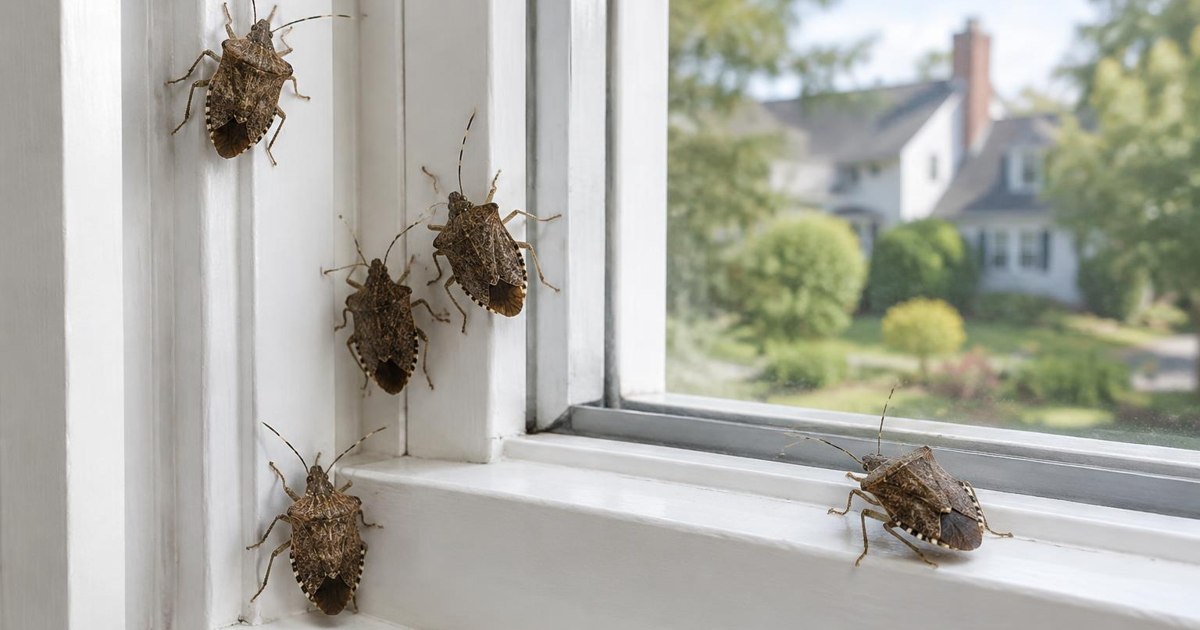
You keep stink bugs out next fall by sealing the exterior of the house before mid September and, where the house has a history of heavy invasions, having a licensed applicator treat the sunny exterior walls and entry lines in the last two weeks of September, just before the bugs congregate. Once they are in the walls in October, the window for prevention has closed for the year.
The sealing list comes straight from Penn State: caulk cracks around windows, doors, siding, utility pipes, behind chimneys and underneath the wood fascia with silicone or silicone-latex caulk, and repair or replace damaged screens. Cornell adds screens and good seals around doors and windows as the first line. Work the south and west walls first, because that is where they land, and look at the house the way a bug does: anywhere a vertical gap gives shade and shelter. Shutters, trim lines, the gap where the siding meets the foundation, the soffit vents, and the sleeve around the AC line set are the five we find open on most Long Island houses.
On exterior treatment, we will give you the honest version. Cornell describes professional perimeter applications to eaves, soffits, roof vents, flashing, chimneys, doors and windows as an option when very large numbers are gathering in the surrounding landscape, and calls it an extreme measure that needs real attention to safety and air quality. Penn State notes the residual lasts days to a week in sunlight. So it is not a one-and-done spray, and it is not something to put on a house that gets a dozen bugs a year. Where it earns its place is a house that collects hundreds, treated by a licensed applicator on the right walls in the right two weeks, paired with sealing so there is less to treat every year after. That is how we run a general insect treatment on Long Island for fall invaders, and we schedule those jobs in early September, not November.