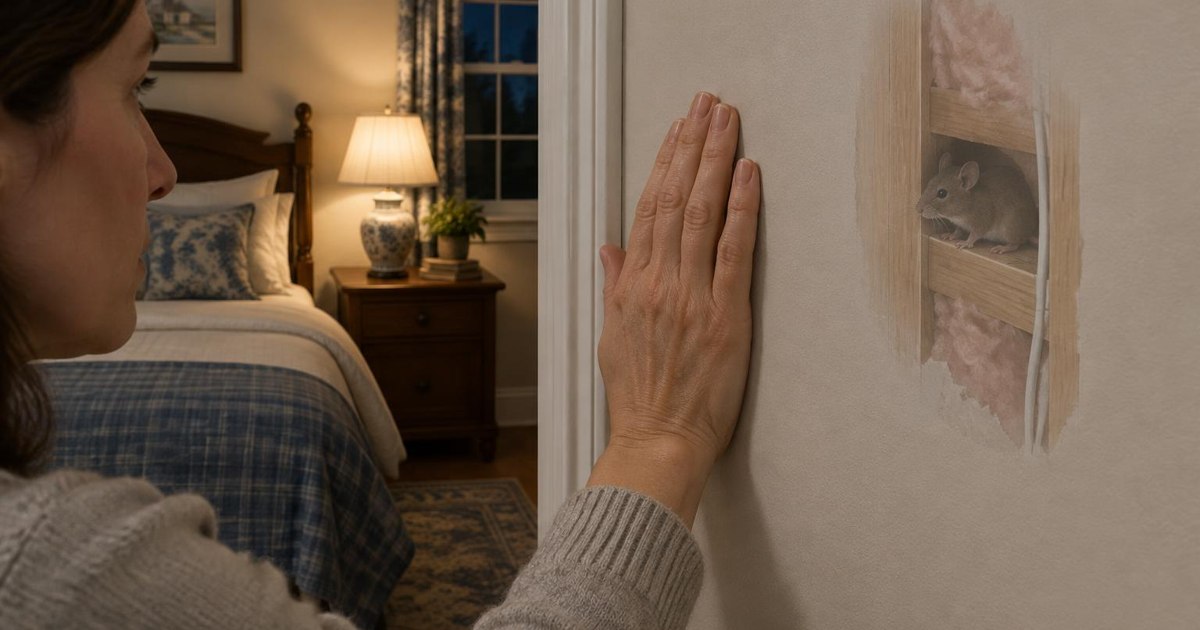
You tell mice, rats, squirrels and raccoons apart by three things: the time of day, the weight of the sound, and where in the house it is coming from. Nighttime plus light and fast means mice. Nighttime plus heavy and low means rats. Daytime, especially early morning, plus the attic means gray squirrels. Nighttime plus heavy and overhead means a raccoon.
Here is the full breakdown we use on the phone before we even get to the house.
Mice: active after dark, loudest in the first hours after the house goes quiet. Light skittering, scratching, faint gnawing. Heard in walls at any level of the house, often around the kitchen, bathroom plumbing walls, and the basement ceiling. Droppings are 1/8 to 1/4 inch long with pointed ends, per Cornell.
Norway rats: active after dark too, but you hear the weight. Heavier scurrying, occasional thumps, and a louder gnaw. Almost always low, in the basement, crawl space, garage walls, or the first floor, because Norway rats burrow in soil and come in at the foundation. Cornell puts their droppings at 3/4 to 1 inch, blunt ended. If you have a 2 to 4 inch hole near the foundation outside, that is the burrow. Our guide to telling a mouse from a rat on Long Island covers all 7 tells.
Gray squirrels: active in daytime. The New York State Department of Environmental Conservation notes most squirrel species are active during the daytime, and SUNY ESF puts gray squirrel activity in the 2 to 3 hours after dawn and before dusk. So if you are woken at 6:30 in the morning by scrambling and rolling sounds in the attic, and it goes quiet all night, that is a squirrel. They are fast, they run in bursts, and they roll acorns across the attic floor.
Flying squirrels: this is the one that fools people. New York has two flying squirrel species, and DEC describes them as largely nocturnal and most active at night. They are tiny, about two ounces, and they live in groups. So "squirrel sounds in the attic, but only at night" on Long Island is often southern flying squirrels, not grays.
Raccoons: nocturnal, per DEC's nuisance wildlife fact sheet, and heavy. Slow, deliberate walking overhead, dragging, thumps, and in spring a chattering or crying sound from the young. Almost always in the attic or a soffit, not inside a wall void. Our raccoons in the attic guide covers what New York law allows once you know it is a raccoon.
Two others worth ruling out. Bats make a scratching and high chirping at dusk as they leave the roost, and the sound comes from one spot near the eaves rather than traveling. Carpenter ants in a damp wall produce a dry rustling, like crinkling cellophane, that is loudest when the house is quiet and is steady rather than start and stop. Both are different jobs, so if the sound does not fit the four above, say so when you call.