Bobby BugsLong Island Pest Control
Commercial

Is a Landlord Responsible for Pest Control in New York? What the Law Requires of Apartment Owners and Property Managers on Long Island, in Queens, and in the Bronx (2026)

Published October 19, 2026. Read time: 11 min.

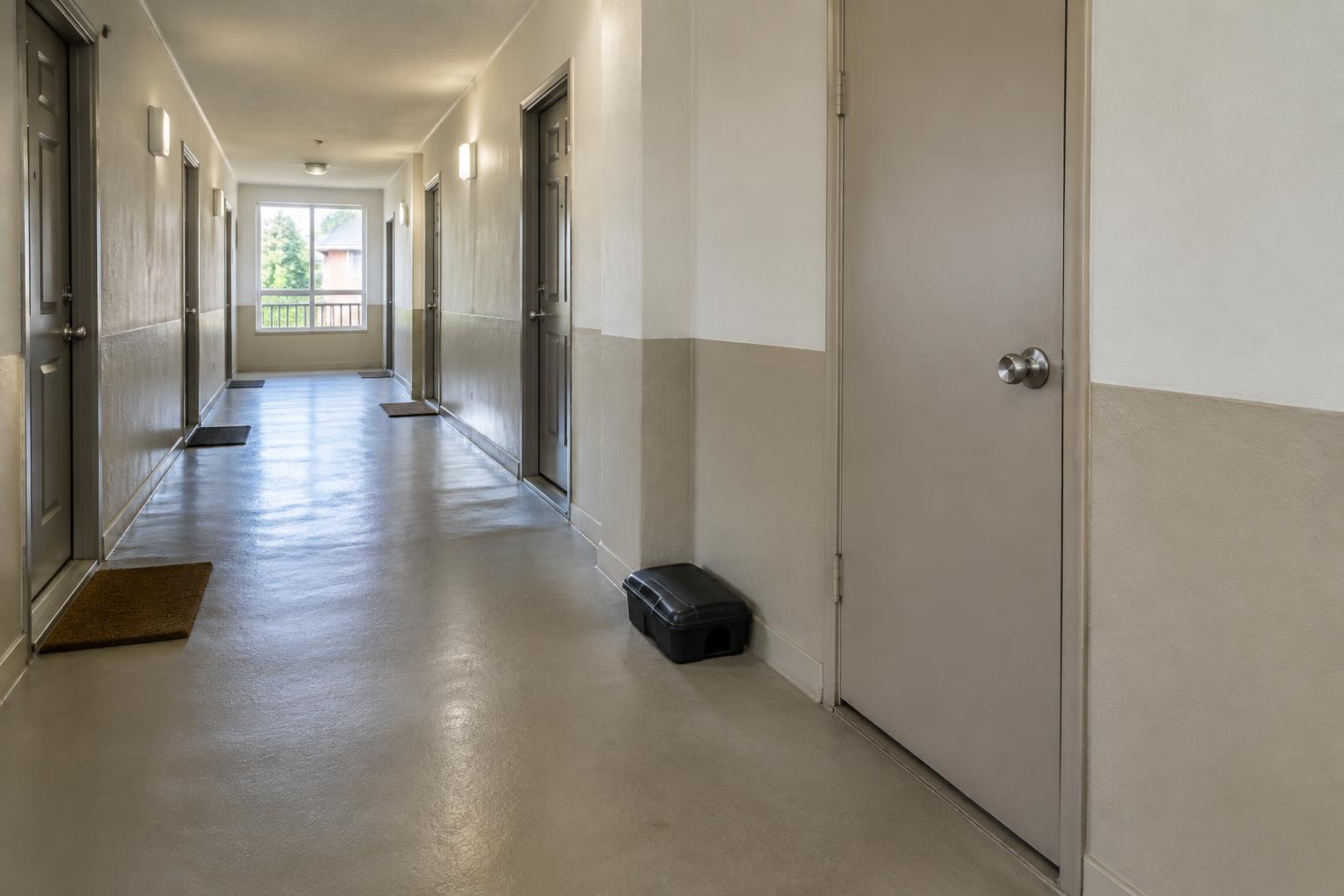
Hallway of a Long Island apartment complex with a tamper-resistant rodent bait station placed by the utility room door

Quick answer.

Yes. In New York the landlord is responsible for pest control in an apartment building. Real Property Law 235-b, the warranty of habitability, is read into every residential lease in the state and requires the apartment and the common areas to be fit to live in, with no condition detrimental to the tenant's health. The one exception is a condition caused by the tenant's own misconduct. On Long Island the Multiple Residence Law adds a direct duty on the owner to keep a building of three or more families free of pests and rodents. In Queens and the Bronx, Local Law 55 of 2018 adds an annual pest inspection of every occupied unit and common area, a 21 day correction clock on roach, mouse, and rat violations, and a requirement that any pesticide be applied by a DEC licensed professional. The owner's leverage against a tenant-caused problem is a written inspection record, which is why a building-wide program with a visit sheet every time is the cheapest insurance a manager can buy.

Key points

Is a landlord responsible for pest control in New York?

Yes, in nearly every case. Real Property Law 235-b, the warranty of habitability, is part of every residential lease in New York whether it is written in or not, and it requires the landlord to keep the apartment and the shared common areas fit for human habitation and free of any condition that is dangerous, hazardous, or detrimental to the tenant's life, health, or safety. A roach or mouse problem is that condition.

I have been treating apartment buildings on Long Island for thirty five plus years, and the first thing I tell a new property manager is that the argument about whose fault it is usually costs more than the treatment. The statute is short. The landlord warrants the premises are habitable. The tenant cannot sign that away, because the law says any agreement to waive it is void as against public policy. If a tenant withholds rent over roaches and you end up in front of a judge, the judge is reading 235-b.

Long Island buildings have a second layer. The Multiple Residence Law covers cities under 325,000 people and every town and village in the state, which is all of Nassau and Suffolk, and it applies to any dwelling occupied by three or more families living independently. Section 174 of that law says the owner must keep the whole building and the lot in good repair and clean, and specifically free of pests and rodents, along with dirt, garbage, and anything else that could endanger life or health. That is not a tenant-complaint standard. It is a standing duty on the owner.

New York City has its own version in Multiple Dwelling Law 80, which requires the owner to keep the building, the yards, courts, and passages "clean and free from vermin," and in the Housing Maintenance Code, which I get to below. The short version for a manager with buildings in Massapequa and Jackson Heights: the duty is yours in both places, and the City adds paperwork.

apartment and property manager pest control
What if the tenant caused the infestation?

Then the owner is not the one in breach, but only if the owner can show it. Real Property Law 235-b carves out conditions caused by the tenant's misconduct, and Multiple Residence Law 174 lets a tenant be held responsible for a violation that results from their own wilful act, assistance, or negligence. Without an inspection record from before the complaint, that exception is a theory.

Here is how it plays out. A tenant in a 24 unit building calls about roaches. The unit is a mess, there is food on the floor, and the roaches are obviously being fed. The manager says it is the tenant's problem. The tenant says the roaches came through the wall from the vacant unit next door. Now who is right? If the building has a program with a visit sheet from last month showing zero activity on the monitors in that hallway and the adjacent units, the manager has a case. If the last pest visit was "whenever someone complained," the manager has nothing, and the roaches are in the shared wall by now anyway.

The practical rule we give managers is to treat first and argue second. German cockroaches do not respect the lease line. The egg case produces 30 to 40 nymphs, and a female carries it until it is nearly ready to hatch, so by the time the complaint comes in there are already three apartments involved. Treat the stack, document the condition of the unit with photos and the visit sheet, and bill back under the lease if the record supports it. The building stays clean and the file stays clean.

What extra rules apply to apartment buildings in Queens and the Bronx?

Four things. Local Law 55 of 2018 requires owners to investigate every occupied unit and the common areas for pests at least once a year, to use integrated pest management, and to have any pesticide applied by a DEC licensed pest professional. Roach, mouse, and rat violations are immediately hazardous with 21 days to correct. And owners of multiple dwellings must file an annual bedbug report with HPD each December.

What New York City requires of apartment building owners for pests under Local Law 55 of 2018 and the bedbug reporting law
RequirementWhat it means for the owner or managerWhere it comes from
Annual investigationInspect every occupied unit and all common areas for indoor allergen hazards, including pests, at least once a year, and again on a complaint, a known condition, or an HPD violationAdministrative Code 27-2017.2
Integrated pest managementRemove nests and debris, seal entry points, fit door sweeps so the gap is no more than one quarter inch, fix leaks, replace saturated materials. Pesticides cannot replace these stepsAdministrative Code 27-2017.8
Licensed applicator onlyAny pesticide must be applied by a pest professional licensed by the NYS Department of Environmental ConservationAdministrative Code 27-2017.8(a)(4)
21 day correction clockCockroach, mouse, and rat violations are classified immediately hazardous and must be corrected within 21 days, with a sworn certification due within five days after the correction dateAdministrative Code 27-2017.4 and 27-2115(o)
PenaltiesCivil penalties for failing to correctAdministrative Code 27-2115(o)(5)
Lease noticeEvery lease must carry a conspicuous notice of owner and tenant obligations, plus the Health Department pamphletAdministrative Code 27-2017.2(c)
Annual bedbug reportFile electronically with HPD between December 1 and December 31 every year, even if the building had no bedbugs, then give the report and the filing receipt to tenants at lease signing or post them in the buildingAdministrative Code 27-2018.1 and 27-2018.2

None of that applies to a building in Hempstead or Huntington. Nassau and Suffolk run on the State Sanitary Code, the Multiple Residence Law, and the warranty of habitability, enforced by the town building department and the county health department when a complaint comes in. A manager with a portfolio that crosses the city line needs one program that satisfies the stricter set, because the inspection in Queens is the one that comes with a calendar and a fine.

Can the super or the maintenance crew treat the apartments themselves?

No. Under Environmental Conservation Law 33-0905, a person may generally apply pesticides only in the dwelling unit where they live unless they are a certified commercial applicator, and the State Department of Health's guide for landlords says pesticide applications should not be done in an occupied unit by an unlicensed landlord. In Queens and the Bronx, Local Law 55 says it outright: licensed professional only.

The super can do a great deal that is not spraying. He can set sticky monitors, seal the gap under the boiler room door, fit the door sweeps, pull the trash room apart and hose it, and walk the units with a flashlight. That work is most of integrated pest management, and it is what the City's own rules describe. What he should not do is buy a case of aerosol at the supply house and fog the hallways. The products are pyrethroids, which repel German cockroaches instead of killing the colony, so the roaches move from the hallway into the units. He has made the problem worse, created a chemical exposure issue in a building full of kids, and done it without a license.

Tenants are on a shorter leash. The State guide says a tenant may use a general use pesticide in their own living space but may not apply anything in common areas like hallways, doorways, or stairwells. That is worth putting in the lease rider, because the number of tenants who fog their own apartment and push the roaches into the neighbor's is not small.

licensed applicator

Why does treating one apartment never fix a building?

Because the population is not in one apartment. German cockroaches move through shared walls, pipe chases, and the voids behind kitchens and bathrooms, and mice travel the whole building through a gap the width of a pencil. Treat the unit that complained and the roaches in the three units around it keep breeding and move back in within weeks.

The numbers explain it. One egg case is 30 to 40 nymphs. A nymph is a breeding adult in about 50 to 60 days at normal indoor temperature, faster in a warm building. Roaches spend about 75 percent of their lives inside cracks 1/32 to 3/16 of an inch wide, which in an apartment building means the plumbing wall between two kitchens, the gap around the radiator pipe, and the void under the cabinet base. When we treat 4B and skip 4A, 4C, and 3B, we have treated the lobby of the colony and left the bedrooms.

Mice are the same story with different anatomy. The CDC puts the gap a mouse needs at 1/4 inch, the width of a pencil. In a garden apartment complex that is the gap where the gas line enters, the space under the utility room door, and the bottom corner of every exterior door with a worn sweep. A tenant's complaint about mice in the kitchen is a building complaint. The traps go in the unit, but the exclusion work and the exterior bait stations go on the building, or the next tenant calls next month.

unit-by-unit treatment fails in multifamily buildings / mouse or rat

What does a building-wide pest control program include?

Scheduled service of the common areas, trash rooms, boiler rooms, and exterior on a monthly or every-other-week cadence, unit treatments when a tenant reports activity, a turnover treatment on every vacant unit before the next tenant moves in, exterior rodent stations where the building needs them, and a written record after every visit that the manager keeps on file.

  1. The baseline walk. On the first visit we walk every common area, the compactor or trash room, the boiler room, the laundry, the basement, and the exterior perimeter, set monitors, and give the manager a written map of what we found.
  2. Scheduled common area service. Monthly for most buildings, every other week for buildings with active pressure or a history. Trash rooms, chases, and mechanical rooms get treated on the schedule whether or not anyone complained.
  3. Unit response. When a tenant reports activity, we schedule with the tenant, send prep instructions ahead, and treat the unit and the adjacent units on the same stack. The visit sheet records the condition of the unit for the manager's file.
  4. Turnover treatment. Every vacant unit gets inspected and treated before the new tenant's keys are cut. This is the single visit that prevents the most complaints, because the new tenant never meets the old tenant's roaches.
  5. Exterior rodent stations. Tamper-resistant stations along the foundation and by the dumpsters where the building calls for them, checked and logged on every visit.
  6. Exclusion recommendations. Door sweeps, pipe penetrations, and vent screens get written up with photos for the super. We do not do exclusion construction work, but the list tells the super exactly what to close.
  7. The record. A visit sheet after every visit: date, areas, monitor counts, products and placements, and recommendations. New York requires commercial applicators to keep application records for at least three years under ECL 33-1205. The manager gets a copy every time.

The program covers roaches, mice, rats, ants, pantry pests, wasps on the building, and more. One schedule, one point of contact for every building in the portfolio, visits Monday through Sunday, 7:00 a.m. to 10:00 p.m. scheduled around the tenants.

How fast does a landlord have to respond to a pest complaint in New York?

In Queens and the Bronx, a cockroach, mouse, or rat violation issued by HPD is immediately hazardous and must be corrected within 21 days, with a sworn certification due five days after that. On Long Island there is no statutory day count, but the warranty of habitability runs from the day the condition exists, and a tenant who complains in writing and gets nothing has the rent abatement argument from that date.

The 21 days is the outside limit, not the target. A judge in Hempstead or Islip who sees a written complaint dated the first of the month and a first treatment on the twenty-eighth is going to ask what the owner was doing for four weeks. Our program standard for buildings under contract is a unit visit scheduled within two business days of the manager's call and same-day response for anything the manager flags as urgent. That is a service commitment, not a legal one, but it is the kind of record that ends the conversation in court.

The other reason to move fast is biology. Every week of delay on a roach complaint is another round of egg cases hatching in the shared wall. Every week of delay on mice in October is another litter. The cheapest treatment any building ever gets is the one that happens the week the first tenant calls.

What should a property manager look for in a pest control company on Long Island?

A written visit record every time, one point of contact for the whole portfolio, service scheduled around tenants rather than around the technician, turnover treatments as a standing line item, coverage for any pest that shows up and not just roaches, a DEC certified applicator on every job, and a written guarantee. If a company cannot show you a sample visit sheet, keep looking.

Managers tell me the thing they want most is to stop thinking about it. That means a company that answers the phone, shows up when the tenant is told it will, and sends the paperwork without being asked. We treat buildings in Nassau and Suffolk, Queens, and the Bronx, so a manager with a mixed portfolio has one vendor and one record format that satisfies the City's rules and covers the Long Island buildings at the same time.

What sets the price is the number of units, the number of buildings and how spread out they are, the condition on the baseline walk, how many exterior stations the property needs, and the visit frequency. Every quote is written. The baseline walk tells us the number, and the number is the same every month, which is what a manager needs for a budget.

If you are reading this because a tenant just texted you a photo of a roach on the stove, that is the right time to call. We will walk the building, give you the written plan, and get the first visit on the calendar.

commercial pest control / German cockroach / mice exterminator

Frequently asked questions

Is a landlord responsible for pest control in New York?

Yes. Real Property Law 235-b, the warranty of habitability, requires the landlord to keep the apartment and the common areas fit to live in and free of conditions detrimental to health, and a tenant cannot waive it. The exception is a condition caused by the tenant's own misconduct, which the owner has to be able to prove.

Who pays for pest control in an apartment building on Long Island?

The owner, as a default. Multiple Residence Law 174, which covers all of Nassau and Suffolk, requires the owner of a building with three or more families to keep it free of pests and rodents. A tenant can be held responsible only for a violation caused by their own wilful act or negligence.

Does a landlord have to exterminate for roaches in NYC?

Yes. Under Local Law 55 of 2018, owners must investigate every occupied unit and the common areas for pests at least once a year, use integrated pest management, and have pesticides applied by a DEC licensed professional. A cockroach, mouse, or rat violation is immediately hazardous and must be corrected within 21 days.

Can a tenant withhold rent for roaches in New York?

The warranty of habitability gives tenants a rent abatement claim when the landlord breaches it, and New York courts do not require expert testimony to calculate the damages. Whether and how much depends on the facts, and a tenant should speak with a lawyer or a local tenant resource before withholding. For an owner, the practical answer is that a documented program removes the argument.

Can a landlord or super spray for bugs in an apartment?

No, not in an occupied unit. Environmental Conservation Law 33-0905 generally limits pesticide use to the unit where a person lives unless they are a certified commercial applicator, and the State Department of Health's landlord guide says unlicensed landlords should not apply pesticides in occupied units. In New York City, Local Law 55 requires a DEC licensed pest professional.

How often should an apartment complex have pest control?

Monthly common area service is the floor for most buildings, every other week for buildings with active activity or a history, plus unit visits on complaint and a turnover treatment on every vacancy. The schedule steps down as monitor counts fall and steps back up if they rise.

What is the annual bedbug report New York City landlords have to file?

Owners of multiple dwellings in New York City must file an electronic bedbug infestation history with HPD between December 1 and December 31 every year, even if the building had no bedbugs, then provide the report and the filing receipt to tenants at lease signing or renewal or post them in a prominent place in the building.

Related reading

Sources: New York Real Property Law Section 235-b, Warranty of habitability; New York Multiple Residence Law Section 174, Repairs and cleanliness; Multiple Residence Law Section 3, Application; Multiple Residence Law Section 4, Definitions; New York Multiple Dwelling Law Section 80, Cleanliness; ; NYC Department of Housing Preservation and Development, Bedbug Annual Report FAQ, Administrative Code 27-2018.1 and 27-2018.2; New York State Department of Health, The Landlord and Tenant Guide to Pest Management; New York Environmental Conservation Law Section 33-0905; and Section 33-1205; Texas A&M AgriLife Extension, Cockroach Biology and Management, ENTO-037; University of Florida IFAS Extension, German Cockroach, EENY-002; CDC, How to Seal Up to Prevent Rodents.

Managing buildings on Long Island, in Queens, or in the Bronx and tired of fielding the roach and mouse calls? One program, one contact, a visit sheet every time. Call (516) 509-6001.

Back to all guides

This article is general pest information for Long Island homeowners, not a diagnosis of your specific situation. Pest behavior varies by home, season, and species, and every job is quoted in writing before any work begins. Pesticide applications are performed by licensed New York State applicators in accordance with label requirements. This guide describes New York pest control and housing rules in general terms and is not legal advice; owners and tenants with a dispute should consult a New York attorney.

Call nowText usGet a quote