Bobby BugsLong Island Pest Control
Commercial

Cockroaches in Your Restaurant Kitchen: Why They Keep Coming Back After the Exterminator, and the Program That Actually Ends It (Long Island, 2026)

Published October 19, 2026. Read time: 11 min.

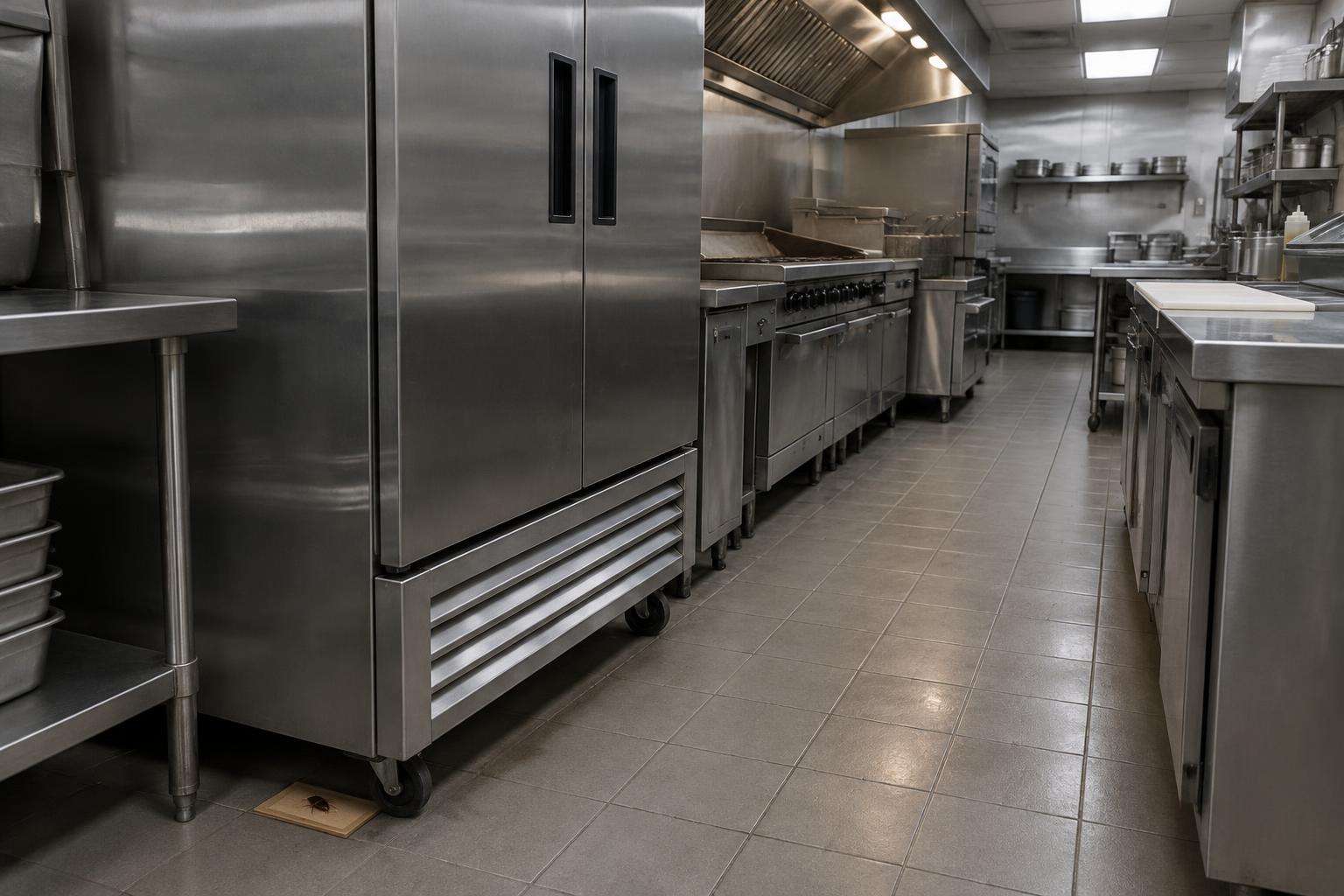
Commercial restaurant kitchen line on Long Island after closing with a cockroach monitor trap placed under the reach-in cooler

Quick answer

Roaches come back after a restaurant treatment for three reasons: the egg cases the female was carrying hatch 30 to 40 nymphs each a few weeks after the visit, the spray never reached the cracks where the colony actually lives, and a working kitchen gets new roaches delivered in cardboard every week. German cockroaches spend about 75 percent of their lives in cracks as narrow as 1/32 of an inch, warm and close to water, which is exactly what a cook line is. One spray cannot end that. What ends it is a program: a full inspection with sticky monitors, gel bait and dust placed where the roaches are, a follow-up visit on a schedule that beats the hatch cycle, and a written record of every visit so your file is ready when the inspector walks in.

Key points

Why do cockroaches keep coming back in my restaurant after treatment?

They come back because the treatment killed the roaches that were out in the open and missed the ones that matter. The egg cases hatch after the visit, 30 to 40 nymphs each. The colony in the wall void or under the line was never touched. And your Tuesday produce delivery brought new ones in the boxes.

I have been doing pest control on Long Island for thirty five plus years, and the restaurant call I get most is "we had a guy spray last month and they are back." Nothing surprised me about that. A German cockroach female carries her egg case until it is nearly ready to hatch, and nymphs often hatch while she is still carrying it. Spray kills what it touches. It does not kill what is inside that case. Three to four weeks later the kitchen is crawling again and the owner thinks the exterminator did nothing.

The second problem is where the roaches live. Researchers at Texas A&M put it at about 75 percent of their lives spent inside cracks between 1/32 and 3/16 of an inch wide, warm, and near water. In a restaurant that is the gap behind the reach-in gasket, the compressor housing, the hollow legs on the prep table, the control panel on the dish machine, and the void behind the hand sink. A surface spray or a bug bomb does not get in there. The same Texas A&M guidance says total release aerosols generally fail for exactly that reason, and that pyrethroid sprays are highly repellent to German cockroaches. Spray the base of the line with the wrong product and the colony moves two feet deeper into the equipment.

The third problem is the front door. Cardboard comes in every day, and cockroaches and their egg cases ride easily in boxes and sacks. If the dry storage room is stacked with broken-down cases, you are importing roaches and giving them a place to live in the same motion. A one-time treatment cannot fix a kitchen that re-seeds itself weekly. Only a schedule can.

Where are the roaches actually living in a working kitchen?

Warm, dark, tight, and wet. In a restaurant that means the motor and compressor housings on reach-ins and lowboys, the voids behind and under the cook line, the dish machine, the hand sink and mop sink plumbing, the soda and beer line chases at the bar, and the cardboard in dry storage.

Where German cockroaches hide in a restaurant kitchen on Long Island, and what we find there
AreaWhy they are thereWhat we usually find
Reach-in and lowboy compressorsConstant warmth, grease film, darkAdults and nymphs packed in the vent grille and motor housing
Under and behind the cook lineHeat, spilled food, hollow table legsEgg cases in the hollow legs, droppings like crushed pepper on the wall
Dish machine and three-bay sinkWater, warmth, soap scum, food scrapsNymphs around the control panel and under the drainboard
Hand sink and mop sink plumbingWater and wall voidsActivity behind the escutcheon plates and inside the wall
Bar soda and beer chasesSugar, moisture, cable penetrationsRoaches running the chase between the bar and the walk-in
Dry storageCardboard, flour, warmth from the ceilingEgg cases glued inside case flaps, live roaches in corrugation
Dining room wait stationsSugar packets, crumbs, coffee dripsSpillover population once the kitchen is heavy

The tell is the droppings. German cockroach droppings look like finely ground black pepper and collect in the corners of the harborage. When we inspect a kitchen we are looking for pepper, not roaches. The roaches come out at night. The pepper is there at 2 in the afternoon, and it tells us where to put the bait.

What does a cockroach treatment that actually works look like?

A treatment that works starts with an inspection and sticky monitors to find every harborage, then puts non-repellent gel bait and a light dust inside the cracks where the roaches live, not on the surfaces where they walk. It skips foggers entirely, and it comes back on a schedule timed to beat the hatch cycle.

  1. Inspection with a flashlight and monitors. We pull the kick plates, open the compressor housings, and set sticky monitors at the base of every reach-in, under the line, by the dish machine, and in dry storage. Monitor counts tell us where the colony is and, on the next visit, whether it is shrinking.
  2. Gel bait in the cracks. Baits are among the most effective tools for German cockroaches and work best when the roaches have few other things to eat, which is why the sanitation section below matters. Bait goes inside the harborage, in small placements, dozens of them, never a smear on an open surface.
  3. Dust in the voids. A light application of an insecticidal dust goes into wall voids, hollow table legs, and the chases behind the bar. Heavy dust piles get avoided by the roaches, so light is the whole technique.
  4. Crack and crevice treatment, non-repellent only. Where a liquid is called for, we use products that do not repel, so the roaches keep walking through the treatment instead of relocating.
  5. No total release foggers. They do not reach the cracks and they contaminate the surfaces you need for food. Texas A&M's guidance says they generally fail, and that matches what we see.
  6. Follow-up inside the hatch window. Nymphs from the egg cases we could not reach will be out and feeding within weeks. The next visit is scheduled to catch them before they reach breeding age at 50 to 60 days.
  7. Rotation. Any kitchen that gets treated regularly needs the active ingredients rotated so the population does not build resistance. If a bait stops working within two to three weeks, we change it.

The number that matters is the monitor count from visit to visit. When the count on the trap under the lowboy goes from 40 to 6 to 0, the problem is ending. When an owner tells me a company "sprayed" and could not show him a single trap count, I know why the roaches are back.

Does a restaurant need a one-time cleanout or monthly pest control?

A restaurant with active roaches needs a cleanout followed by recurring service, and a restaurant with no activity still needs a monthly visit, because the deliveries, the heat, the water, and the food never stop. We start weekly while there is active pressure, drop to every other week when the counts fall, and hold at monthly once activity stops.

The one-time job is the right call for exactly one situation: a kitchen that has never had roaches, had a single delivery bring a few in, and has them in one place. We treat it, come back once to confirm, and you are done. That is not most restaurants. Most restaurants that call us have had roaches for months and have had at least one company spray. For those kitchens the schedule is the treatment. The weekly visits during the cleanout are what beat the hatch cycle. The every-other-week visits confirm the counts are at zero. The monthly maintenance is what keeps the next cardboard delivery from starting it over.

Monthly service also covers everything else that shows up in a kitchen: mice when the weather turns, fruit flies in the bar drains, ants in the dish pit in spring, flies at the back door in summer, and more. One schedule, one tech who knows your kitchen, one written record every visit. Visits are scheduled around your hours, before you open or after you close, Monday through Sunday. We do not need your line shut down to work.

restaurant pest control on Long Island

What will the health inspector cite for roaches, and is it different in Queens and the Bronx?

In Nassau and Suffolk, the inspector enforces the New York State Sanitary Code, which requires the premises to be free of insects, rodents, and harborage and says pesticides cannot substitute for sanitation. In Queens and the Bronx, the City scores roaches by count and area, and more than 20 live roaches is Condition Level V, where the inspector calls the office about closing.

Here is the actual language, because owners should know what the citation says. Section 14-1.160 of the State Sanitary Code (10 NYCRR 14-1.160), which county health departments enforce in Nassau and Suffolk, reads in full: "The premises are to be free of insects, rodents, harborage, and insect or rodent breeding conditions. Openings to the outside are to be protected against the entrance of insects and rodents. Pesticides are not to be used in place of or as a substitute for proper sanitation." Three sentences. Note the middle one. A door that does not close tight is a violation before a single roach is found.

New York City runs letter grades, and the Health Department's inspection guide scores roaches as violation 4M with five condition levels.

How New York City scores live roaches in a restaurant, from the Health Department's inspection guide
Condition levelWhat the inspector found
Level IRoaches present in a food or non-food area (the guide's example is two live roaches in dry food storage)
Level II6 to 10 live roaches in one area, or 1 to 5 in two areas
Level III11 to 15 in one area, 6 to 10 in two areas, or 1 to 5 in three areas
Level IV16 to 20 in one area, 11 to 15 in two, 6 to 10 in three, or 1 to 5 in four
Level VMore than 20 live roaches, or other conditions conducive to infestation. Inspector calls the office to discuss closing or other enforcement

Grades run A at 0 to 13 points, B at 14 to 27, and C at 28 or more, and the guide notes that a score of 28 or more on three consecutive inspections can lead to closure. Roach counts are not the only pest line, either. Violation 8A covers doors and thresholds that are not vermin proof and openings in the facade, which is the City version of that middle sentence in the State code. If you want the full breakdown of what gets a restaurant closed, including what 1,588 Nassau County inspection records show, see can a restaurant get shut down for mice in New York.

Can my staff spray for roaches themselves?

Your staff can clean, seal, and set sticky monitors, and that is most of the work. Pesticide application in a commercial kitchen is a job for a New York State DEC certified commercial applicator, and the State Sanitary Code says pesticides are not a substitute for sanitation in any case, so a can of spray is the wrong tool even when it is legal.

The practical problem is bigger than the legal one. The over-the-counter sprays are pyrethroids. They are repellent to German cockroaches. Your line cook hits the base of the reach-in with it at the end of the shift, the roaches move up into the compressor housing, and now they are harder for us to reach when we come. The foggers are worse: they cannot penetrate the cracks, they leave residue on the prep surfaces, and the inspector will ask about them. Put the staff on the checklist in the next section and leave the chemistry to the tech. For the full answer on what an owner can and cannot legally do, see spray for bugs in my own restaurant.

What should the kitchen crew do between visits?

Break down and remove cardboard the same day it arrives, keep the line and the dish pit dry overnight, clean under and behind the equipment on a schedule, store dry goods in sealed containers off the floor, and tell the tech where you saw activity. Sanitation is what makes the bait work, because a roach with other food ignores it.

The between-visits checklist we give every restaurant

  1. Cardboard out the day it comes in. Break down cases and get them to the dumpster. Never store food in the shipping case in dry storage.
  2. Dry overnight. Squeegee the line, the dish pit, and under the three-bay sink before close. Roaches need water more than food.
  3. Pull and clean behind the reach-ins weekly. Grease film on a compressor is a buffet.
  4. Degrease the hollow legs and the kick plates. Egg cases get glued in there.
  5. Sealed containers for flour, sugar, rice, and dry pasta. Lids on, off the floor, oldest in front.
  6. Door sweeps and screens tight. The State code treats an unprotected opening as a violation on its own, and mice get through a gap the width of a pencil, 1/4 inch, according to the CDC.
  7. Drains flushed and scrubbed. Fruit flies breed in the slime layer, not in the fruit.
  8. Dumpster lid closed and the pad hosed. The roaches and rats outside are the ones that come inside in October.
  9. Tell us what you saw. A roach by the espresso machine on a Friday night is a data point. Text it to your tech.

What should a restaurant pest control contract include on Long Island?

A written record after every visit with what was found and where, monitor counts you can see trend down, service scheduled around your hours, coverage for any pest that shows up and not just roaches, a written guarantee, and one person you can text. If a company cannot show you a visit record, do not sign.

The record is the whole point. When the inspector asks what you are doing about pests, the answer is a folder, not a sentence. Each visit sheet shows the date, the areas inspected, the trap counts, what product went where, and what we told you to fix. Commercial applicators in New York are required to keep application records for at least three years under ECL 33-1205, and you should have your copy of every one of them. That folder is what turns "we have a guy" into proof.

Scheduling matters as much as chemistry. A tech who shows up during the lunch rush gets ten minutes and a cook in his way. We book restaurants before open or after close, Monday through Sunday, and we do not need the line down. Weekly during cleanout, every other week once the counts drop, monthly once they are at zero. If something flares up between visits, you text, we come. That covers roaches, mice, rats, ants, flies, pantry pests, and more. A restaurant does not have one pest problem. It has whatever walked in with the last delivery.

What sets the price is the size of the kitchen, how heavy the activity is on the first inspection, how many areas need monitors, and the visit frequency. Every quote is written, and the first inspection tells us the number. If you are looking at the reach-in with a flashlight, call us any day, including Sunday, until 10:00 p.m.

commercial pest control / German cockroach
Frequently asked questions

Why do roaches come back after an exterminator sprays a restaurant?

Because the egg cases hatch after the visit, 30 to 40 nymphs each, and the spray never reached the cracks where the colony lives. Surface sprays and foggers kill the roaches in the open and miss the rest. A kitchen also gets new roaches in cardboard deliveries every week, so without a recurring schedule the problem restarts.

How long does it take to get rid of German cockroaches in a restaurant?

A heavy infestation usually takes several weekly visits to bring monitor counts to zero, because nymphs keep emerging from egg cases for weeks and take about 50 to 60 days to reach breeding age. Light problems clear faster. The schedule then steps down to every other week and monthly maintenance.

How often should a restaurant get pest control on Long Island?

Weekly while there is active roach or mouse pressure, every other week once activity drops, and monthly once it stops. Monthly maintenance is the floor for a working kitchen, because deliveries, heat, water, and food never stop and a new problem can start with one box.

Can a restaurant get shut down for cockroaches in New York?

Yes. In New York City, more than 20 live roaches is Condition Level V on the Health Department's inspection guide, where the inspector calls the office to discuss closing, and 28 or more points on three consecutive inspections can lead to closure. In Nassau and Suffolk, county inspectors enforce the State Sanitary Code, which requires the premises to be free of insects and harborage.

Can I use a bug bomb or fogger in my restaurant kitchen?

No. Total release foggers do not penetrate the cracks where German cockroaches hide, they leave residue on food contact surfaces, and pesticide application in a commercial kitchen is work for a DEC certified commercial applicator. The State Sanitary Code also says pesticides cannot substitute for sanitation.

Where do cockroaches hide in a commercial kitchen?

In the compressor and motor housings on reach-ins and lowboys, under and behind the cook line, around the dish machine, in the hand sink and mop sink plumbing, in the soda and beer chases at the bar, and in cardboard in dry storage. They spend about 75 percent of their lives in cracks 1/32 to 3/16 of an inch wide, warm and near water.

Does Bobby Bugs treat restaurants during business hours?

Visits are scheduled around your hours, before you open or after you close, Monday through Sunday, and we do not need the line shut down. Service covers Nassau and Suffolk County, Queens, and the Bronx, with a written record after every visit.

Related reading

Sources: New York State Sanitary Code, 10 NYCRR Section 14-1.160, Insect and rodent control; New York City Department of Health and Mental Hygiene, Food Service Establishment Inspection Guide, violation codes 4M and 8A and condition levels; New York City Department of Health and Mental Hygiene, How We Score and Grade; Texas A&M AgriLife Extension, Cockroach Biology and Management, ENTO-037; University of Florida IFAS Extension, German Cockroach, Blattella germanica, EENY-002; University of Missouri Extension, Cockroaches, G7384; CDC, How to Seal Up to Prevent Rodents; New York Environmental Conservation Law Section 33-1205.

Roaches back in the kitchen a month after the last guy sprayed? We will walk the line, set the monitors, and give you a written plan and quote. Call (516) 509-6001.

Back to all guides

This article is general pest information for Long Island homeowners, not a diagnosis of your specific situation. Pest behavior varies by home, season, and species, and every job is quoted in writing before any work begins. Pesticide applications are performed by licensed New York State applicators in accordance with label requirements.

Call nowText usGet a quote