Bobby BugsLong Island Pest Control
Commercial

Roaches in Your Apartment on Long Island, in Queens or in the Bronx? Why They Keep Coming Back After You Spray, What Your Landlord Has to Do Under New York Law, and the Program That Actually Ends It (2026)

Published November 9, 2026. Read time: 12 min.

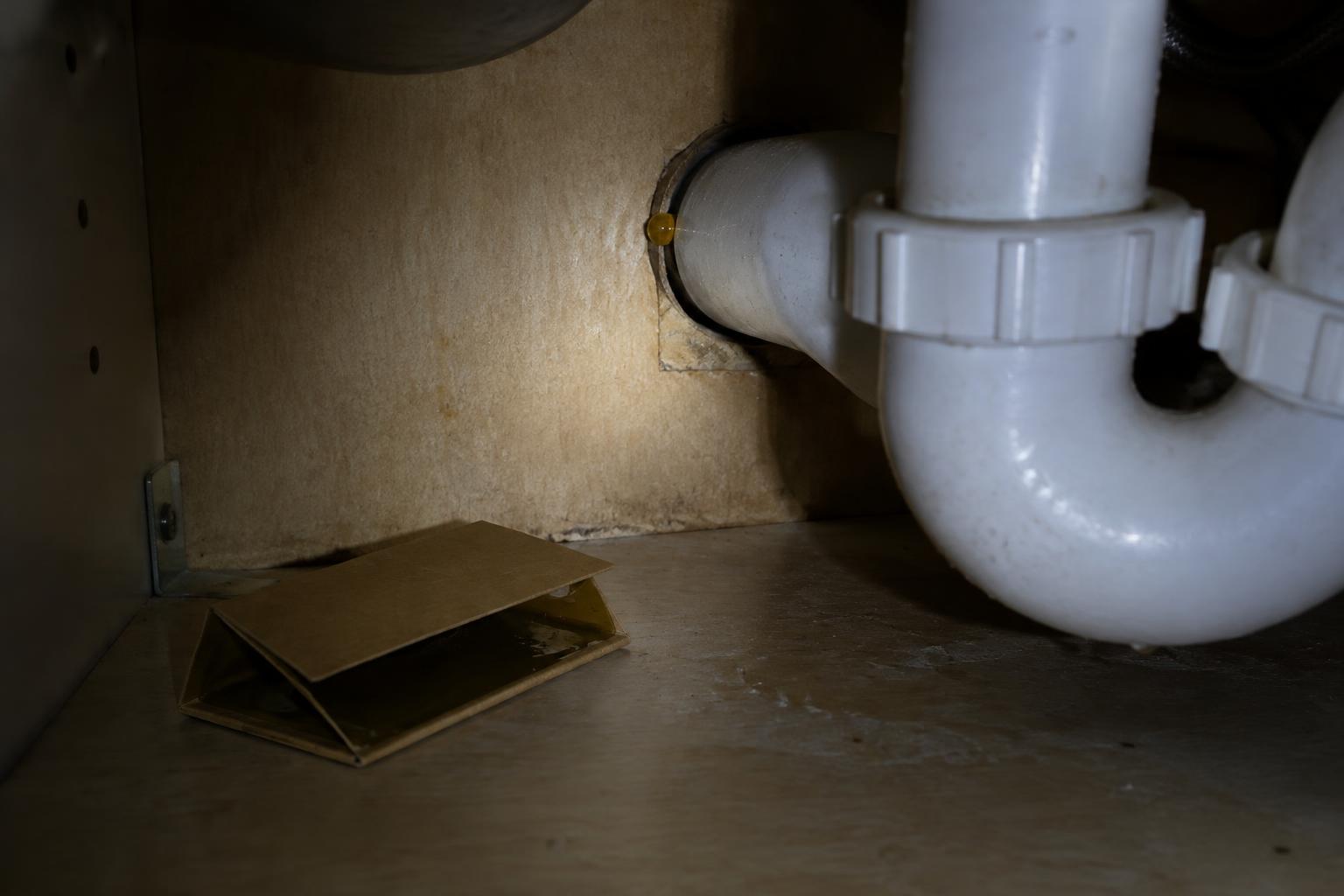
Gel bait placed at a pipe gap under an apartment kitchen sink, the German cockroach harborage that connects units

Quick answer

Roaches keep coming back in an apartment for two reasons: the spray you or the super used pushed them into the wall and next door instead of killing the colony, and the egg cases the females carry hatch about 40 roaches each after the spray wears off. German cockroaches move between units through the pipe chases and wall voids, so a single treated apartment in a building that is not treated refills. The fix is gel bait placed in the cracks where they hide, sticky traps to count them, follow-ups every two to four weeks until a month passes with zero, and the units on either side done at the same time. Under New York law the landlord is responsible for this in a multi-unit building. Our cockroach work carries a 60 day written guarantee.

Key Takeaways

Why do roaches keep coming back after the exterminator sprays?

Because spraying treats the roaches you can see and does nothing about the ones you cannot. German cockroaches spend their lives inside cracks about a quarter inch wide: behind the outlet plates, under the sink where the drain goes through the wall, in the hinge gap of the cabinet door, inside the back of the refrigerator motor housing. A spray on the counter hits the few that are out, and the Rutgers fact sheet on German cockroaches notes that pyrethroid sprays are repellent, so the colony relocates deeper and sideways, through the pipe chase into the next apartment.

Then the biology finishes the job. A female carries her egg case until a day or two before it hatches, which protects the eggs from the spray, and each case holds about 40 eggs. Rutgers puts the full life cycle at about 100 days and a single female's output at 200 to 250 eggs. So the spray wears off in a couple of weeks, the cases hatch, and the kitchen is crawling again by the time the next rent check is due. The tenant in a Hempstead two-bedroom who has had the super spray three times since summer and still sees roaches at night is not imagining it. Each spray reset the population by a few weeks and moved some of it next door, where it rebuilt.

The last piece is the building. In a multi-family building, the apartments share plumbing walls and electrical chases, and Rutgers notes infestations spread between units through those common utilities. Treating one unit in a connected building is bailing one compartment of a boat. If you want the short version of the spraying problem, our answer page on why roaches come back after spraying has it.

Which roach do I have, and does it matter?

It matters, because the treatment is different. German cockroaches are the small ones, about half an inch, light brown with two dark stripes behind the head, and they live inside, in the kitchen and bathroom, breeding year round. They are the roach in almost every apartment call we get on Long Island, in Queens, and in the Bronx. American cockroaches are the big ones, an inch and a half or more, reddish brown, and the NYC Health Department notes they are typically found in moist basements and lower floors, coming up through drains and from the building's lower levels. Oriental cockroaches are black and stay low and damp.

If the roaches are small, fast, and in your kitchen cabinets at night, you have German roaches and the rest of this guide is for you. If you see one or two very large roaches in a ground floor or basement apartment, especially near a floor drain, that is a building plumbing and moisture problem more than a kitchen problem, and the fix is drains, gaps, and the basement, not your cabinets. Our answer page on what kind of cockroach you have has photos and the tells.

One more identification point: the NYS IPM Program at Cornell notes German cockroaches aggregate because of pheromones in their droppings. Where you see the black pepper specks collected, that is the harborage, and that is where the bait goes.
Do roach sprays, bombs, and foggers make it worse?

Yes, in an apartment they usually do. Three ways. First, repellent sprays scatter the colony into the walls and neighboring units, as above. Second, spraying near bait ruins the bait: Cornell's NYS IPM fact sheet warns that bait avoidance occurs when pesticide sprays are used around baiting systems, so the spray the super put down last week is the reason the gel we put down this week gets ignored. Third, the NYC Health Department states that indiscriminate use of sprays, bombs, and foggers causes many poisonings every year in the city, and it tells residents to use only baits, gels, and boric acid, to avoid foggers and bombs, and never to use products called Tempo or Roach Chalk, which are not legal for home use.

Foggers deserve their own sentence. A fogger fills the open air of a room. German roaches are not in the open air of the room; they are in a quarter inch crack behind the stove. The fog settles on your counters, dishes, and toddler's high chair and never reaches the colony. Our answer page on roach bombs and foggers covers why they fail.

What works is the opposite of a spray: a small amount of non-repellent bait placed exactly where they hide, so they eat it, walk back into the crack, and die there, where the Purdue research on secondary kill shows other roaches that contact the dead one and its droppings die too.

How do you get rid of roaches in an apartment for good? The 5 step program

  1. Count before treating (day 1). We put sticky traps where German roaches live: under the kitchen sink, beside the stove, behind the toilet, which is Rutgers' recommended placement. A night of trap counts tells us how big the population is and which direction it is coming from, and the NYS IPM Program notes that count is what sets how much bait to use. If the heaviest trap is at the wall shared with the next apartment, that is the answer to why the problem keeps coming back.
  2. Clear the harborages so the bait is the best food in the room (day 1). Grease behind the stove, crumbs under the toaster, the open cat food bowl, the cardboard boxes under the sink. Rutgers' sanitation rules: trash and recycling out daily, pet food sealed or removed overnight, cardboard and clutter gone. We HEPA vacuum the live roaches, the dead ones, the shed skins, and the droppings out of the harborages, which also removes the aggregation pheromone and the allergen.
  3. Gel bait in the cracks, never on the counter (day 1). Many pea-sized dots in the harborages: the hinge side of cabinet doors, the gap where the drain pipe goes through the back of the sink cabinet, behind the outlet and switch plates, the underside of the counter lip, the back of the fridge. Rutgers' rule of thumb is 10 to 30 grams for a typical one-bedroom. Gel beats bait stations because it can go inside the quarter inch crack where the roaches actually are. In the Rutgers and Purdue field study, one application in infested apartments knocked counts down 72 percent in a week, 88 percent in two, 97 percent in three, and 99 percent in four.
  4. Treat the neighbors and the chases at the same time (day 1 to 3). The units on either side, above, and below share the plumbing wall. Where the building allows, we treat them in the same visit. Where the building has a recurring program, this is what the program is for. A dust that lasts goes into the wall void behind the plumbing access, which is work only a licensed applicator does.
  5. Follow up every 2 to 4 weeks until a month of zero (weeks 2 to 8). Rutgers' protocol, and ours: re-inspect, re-count the traps, re-bait where the dots have been eaten, and rotate the bait's active ingredient so the colony does not develop aversion, which Cornell's NYS IPM fact sheet recommends on roughly a three month cycle. The job is done when the sticky traps come up empty for four straight weeks. Then the traps stay as monitors, because the building is still a building.

How long does it take, and what sets the price?

A single German roach infestation in an apartment usually takes about a month to clear: the first visit does most of the work, and the follow-ups at two and four weeks catch the hatch from the egg cases that were already carried. A building that has been sprayed repeatedly runs longer, because bait-averse colonies take an extra rotation. A building where only one unit is treated can take forever, which is why we push for the neighboring units.

What sets the price is how many units, how much clutter and grease have to be cleared before the bait can compete, whether the wall voids and chases need treatment, and how many follow-ups the count calls for. A studio in Long Beach with one sink wall and a tidy kitchen is a smaller job than a three-bedroom in Jamaica with a shared chase to two other apartments and a super who has been fogging monthly. For a landlord or property manager, a recurring program with written per-visit records, scheduled weekly, every other week, or monthly around the building's hours, is almost always cheaper per unit than crisis visits, and it is what the law in Queens and the Bronx expects. Every job is inspected and quoted in writing first. Cockroach control carries our 60 day written guarantee, and the service details are on our Long Island cockroach exterminator page. For buildings, start with our apartment and property manager program.

Who has to pay for roach treatment in an apartment: landlord or tenant?

The landlord, in nearly every case in New York. Real Property Law 235-b, the warranty of habitability, is written into every residential lease in the state whether the lease mentions it or not. The landlord warrants that the apartment is fit for human habitation and that tenants will not be subjected to conditions dangerous, hazardous or detrimental to their life, health or safety, and the statute says any lease clause waiving those rights is void as against public policy. A roach infestation is a habitability condition. The one exception in the statute is a condition caused by the tenant's own misconduct.

On Long Island, the Property Maintenance Code of New York State, Section 309, puts pest elimination on the owner before a unit is rented and on the owner in any building with two or more units, with the occupant responsible for keeping their own space pest free and sharing responsibility if their own conduct caused it. In Queens and the Bronx, Local Law 55 of 2018 goes further: owners of buildings with three or more units must inspect every unit for roaches, mice, rats, and mold at least once a year, correct them with integrated pest management rather than pesticides alone, and have any pesticide applied by a DEC licensed professional, with HPD issuing violations when they do not. Tenants report conditions to the landlord first and then to 311. Our answer pages on who is responsible for pest control in NYC apartments and whether Local Law 55 applies on Long Island, and our full guide on landlord pest control responsibility in New York, go through the complaint steps county by county.

A practical note for tenants: put the complaint in writing with the date, photograph the sticky trap, and keep copies. A practical note for landlords: one tenant's roaches are the building's roaches, and the cheapest month you will ever have is the one where you treat the stack of units at once instead of the loud one.

Does having roaches mean my apartment is dirty?

No. German roaches arrive in a grocery bag, a used appliance, a delivery box, or through the wall from the unit next door, and the NYC Health Department's survey found adults in nearly 30 percent of NYC households, about 874,000 homes, reporting roaches in one year. Clean kitchens get roaches. What cleanliness changes is how fast they grow and how well bait competes with the food they already have. A spotless kitchen with a roach problem usually has a neighbor with a bigger one, and no amount of bleach on your counters fixes a pipe chase. Our answer page on whether roaches mean a dirty house says the same thing in a shorter form.

The reason to take it seriously is health, not embarrassment. The NIH's National Cooperative Inner-City Asthma Study found that children who were allergic to cockroaches and lived with high levels of roach allergen were hospitalized for asthma 3.3 times as often as other children with asthma, and Columbia researchers have tied neighborhood differences in New York City childhood asthma rates to roach allergen in the home. The allergen is in the droppings, the shed skins, and the dead bodies, which is why the HEPA vacuum step is in our program and why Local Law 55 calls roaches an indoor allergen hazard.

What makes it worse, and what mistakes restart the clock?

Monthly fogging by the super, a bait placed next to a surface that was just sprayed, cardboard storage under the sink, an open pet food bowl at night, a leaking trap under the sink giving them water, and treating one unit in a stack of six. Each one either feeds the colony, scatters it, or spoils the bait.

The mistakes that start the clock over: spraying over the gel (the roaches stop eating it); putting bait dots on open counters where they dry out and nobody eats them (bait belongs in the crack); stopping after the first visit because you stopped seeing roaches (the egg cases had not hatched yet); never counting with sticky traps (so nobody knows whether it is working or where it is coming from); and letting the landlord treat your apartment alone while 4B goes untouched. The hard truth I give every tenant and every landlord: German roaches are the easiest pest in this business to kill and the hardest to stop coming back, and the difference between the two is whether the building is treated as a building. Done right, with bait in the harborages, traps to count, the neighbors treated, and a month of zero before anyone calls it finished, an apartment stays clear. Done as a spray every time someone complains, it never does.

Frequently asked questions

How do I get rid of roaches in my apartment permanently?

Gel bait placed in the cracks where they hide, sticky traps to count them, the harborages cleaned and vacuumed, the neighboring units treated at the same time, and follow-ups every two to four weeks until the traps come up empty for a month. Sprays and foggers are the reason most apartments never get there.

Why do I have roaches when my apartment is clean?

Because German roaches travel between apartments through pipe chases and wall voids, and arrive in boxes, bags, and used appliances. Cleanliness controls how fast they grow, not whether they show up. In a connected building, your roaches are usually the building's roaches.

Is the landlord responsible for roaches in New York?

Yes, in nearly every case. Real Property Law 235-b, the warranty of habitability, is in every New York lease and cannot be waived. In buildings with three or more units in Queens and the Bronx, Local Law 55 also requires annual inspections for roaches, mice, rats, and mold. The exception is an infestation the tenant caused.

How long does it take an exterminator to get rid of roaches in an apartment?

About a month for a single unit done with gel bait, with the first visit doing most of the work and follow-ups at two and four weeks catching the hatch from carried egg cases. Buildings that have been sprayed repeatedly or where only one unit is treated take longer.

Do roach bombs work in an apartment?

No. A fogger fills the open room and German roaches live inside quarter inch cracks behind appliances and under sinks. The fog never reaches the colony, it contaminates surfaces, and the NYC Health Department advises against foggers and bombs because of poisonings. Bait in the cracks is what works.

Can roaches come through the walls from the neighbor's apartment?

Yes. They follow the plumbing and electrical chases that connect units, and a repellent spray next door pushes them through faster. That is why a single-unit treatment in a multi-family building keeps failing and why we treat the stack.

Does one roach in my apartment mean an infestation?

Usually. German roaches are nocturnal and hide in cracks, so the one you saw on the counter at midnight is a scout from a population you have not seen. A night with two sticky traps under the sink and beside the stove will tell you how many. Our guide on whether one cockroach means an infestation covers the signs.

Related reading

Sources: Rutgers New Jersey Agricultural Experiment Station, Fact Sheet FS1322, German Cockroach; Cornell NYS IPM Program, The German Cockroach: America's #1 Cockroach Pest (Alpert, updated by Frye, 2015); Wang, C., Rutgers University, Baiting Success (Advion gel bait field study), PCT, July 2013; Wang et al., Purdue University, Factors Affecting Secondary Kill of the German Cockroach by Gel Baits, Proceedings of the Sixth International Conference on Urban Pests; NYC Department of Health and Mental Hygiene, Environment and Health Data Portal, Cockroaches; NIAID, Cockroaches Important Cause of Asthma Morbidity Among Inner-City Children (Rosenstreich et al., NEJM 1997); Columbia University Mailman School of Public Health, Cockroach Allergens May Help Explain Childhood Asthma Rates; New York Real Property Law 235-b, Warranty of Habitability; Property Maintenance Code of New York State, Section 309, Pest Elimination; NYC HPD, Indoor Allergen Hazards (Local Law 55 of 2018).

Roaches back again two weeks after the spray? Call (516) 509-6001 and we'll tell you why.

We count them, bait where they live, treat the units that share your walls, and come back until a month passes with zero. Apartment and building programs on Long Island, in Queens and in the Bronx carry our written guarantee and written per-visit records.

Back to all guides

This article is general pest information for Long Island homeowners, not a diagnosis of your specific situation. Pest behavior varies by home, season, and species, and every job is quoted in writing before any work begins. Pesticide applications are performed by licensed New York State applicators in accordance with label requirements.

Call nowText usGet a quote